CASE NAME: Gamino v. The Procter & Gamble Company
CASE NO.: 8:26-cv-01386
JURISDICTION: United States District Court, Central District of California
FILED ON: May 29, 2026
CLASS DEFINITION: All persons in the United States who purchased Secret Invisible Solid Antiperspirant/Deodorant products marketed as “unscented” during the applicable limitations period, with a California subclass of purchasers within the state.
SUMMARY:
According to the complaint, The Procter & Gamble Company allegedly misled consumers by marketing its Secret Invisible Solid antiperspirant and deodorant products as “unscented” despite containing fragrance ingredients. The lawsuit claims that reasonable consumers interpret “unscented” to mean the absence of fragrance, particularly because many consumers seek fragrance-free products due to skin sensitivities and allergies. However, the complaint alleges that the products in fact include fragrance components, contradicting the labeling. As a result, consumers were allegedly deceived into purchasing products they otherwise would not have bought, or would have paid less for, believing they were free of fragrance.
ALLEGATIONS:
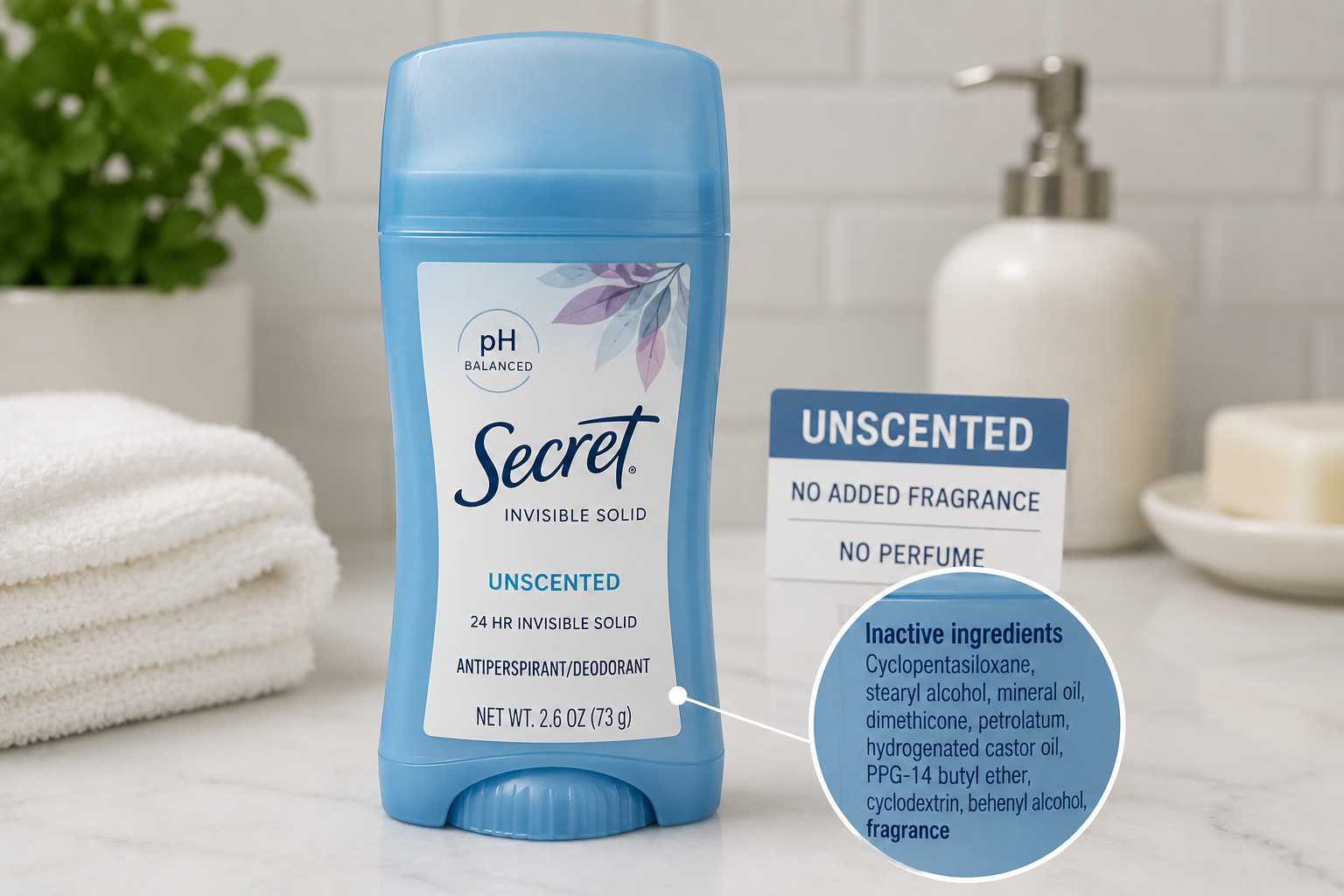
The lawsuit alleges that Procter & Gamble prominently labels and markets its Secret Invisible Solid antiperspirant and deodorant products as “unscented,” a representation that appears clearly on the front of product packaging. As shown in the product image on page 3, the label highlights “unscented,” which the complaint claims communicates that the product contains no fragrance ingredients.
According to the complaint, this representation is false and misleading because the products do, in fact, contain fragrance. The ingredient label shown on page 7 reportedly lists “fragrance” among the inactive ingredients, directly contradicting the “unscented” claim.
The plaintiff alleges that consumers actively seek out unscented or fragrance-free personal care products due to concerns about irritation, allergies, and a desire to avoid unnecessary additives. The complaint explains that fragrance ingredients are commonly associated with skin reactions such as redness, itching, and rashes, making “unscented” claims particularly important to consumers with sensitivities.
The lawsuit further alleges that Procter & Gamble intentionally used the “unscented” label to capitalize on this consumer demand. According to the complaint, the company knew that consumers rely on front-label claims and would interpret “unscented” to mean the absence of fragrance, especially since there is no qualifying language or disclaimer on the packaging.
The complaint also asserts that consumers are unlikely to discover the presence of fragrance by reviewing the ingredient list. It argues that reasonable consumers rely primarily on prominent front-label representations and do not expect contradictory information in fine print. As noted in the complaint, “a company can’t say something misleading on the front of a label and escape liability” through disclosures elsewhere on the packaging.
According to the complaint, the plaintiff purchased the product relying on the “unscented” claim and would not have done so, or would have paid less, had she known it contained fragrance. The lawsuit alleges that consumers paid a price premium for what they believed were fragrance-free products, resulting in economic harm.
The complaint brings claims under California consumer protection laws, including the Consumers Legal Remedies Act, False Advertising Law, and Unfair Competition Law, as well as claims for fraud and unjust enrichment. The plaintiff seeks damages, restitution, injunctive relief, and other remedies on behalf of herself and the proposed class.

Leave a Reply