CASE NAME: Pragovich et al. v. Nara Organics, Inc.
CASE NO.: 26-cv-05778
JURISDICTION: United States District Court, Southern District of New York
FILED ON: July 8, 2026
CLASS DEFINITION: All consumers nationwide who purchased Nara Organics infant formula products during the applicable class period
SUMMARY:
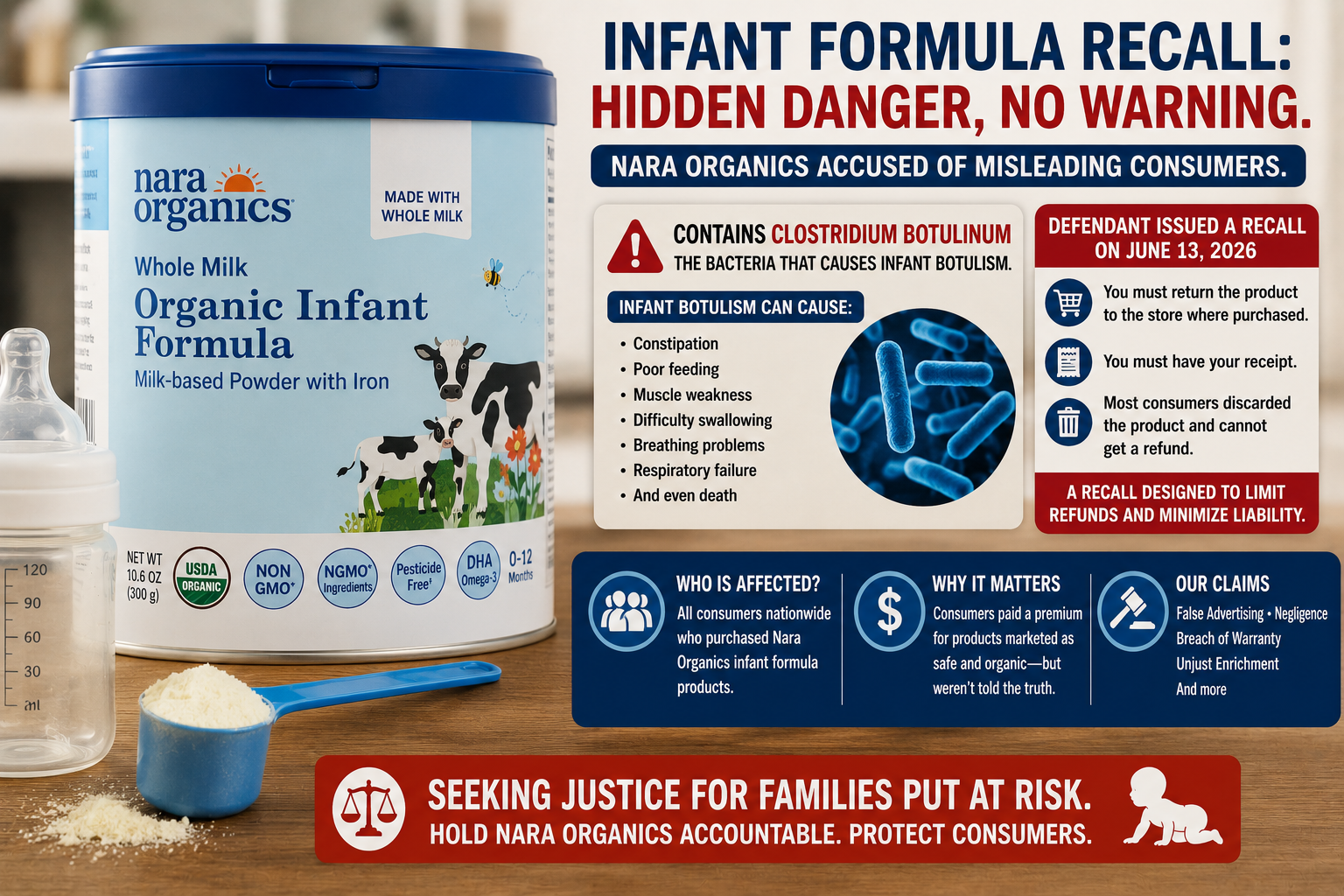
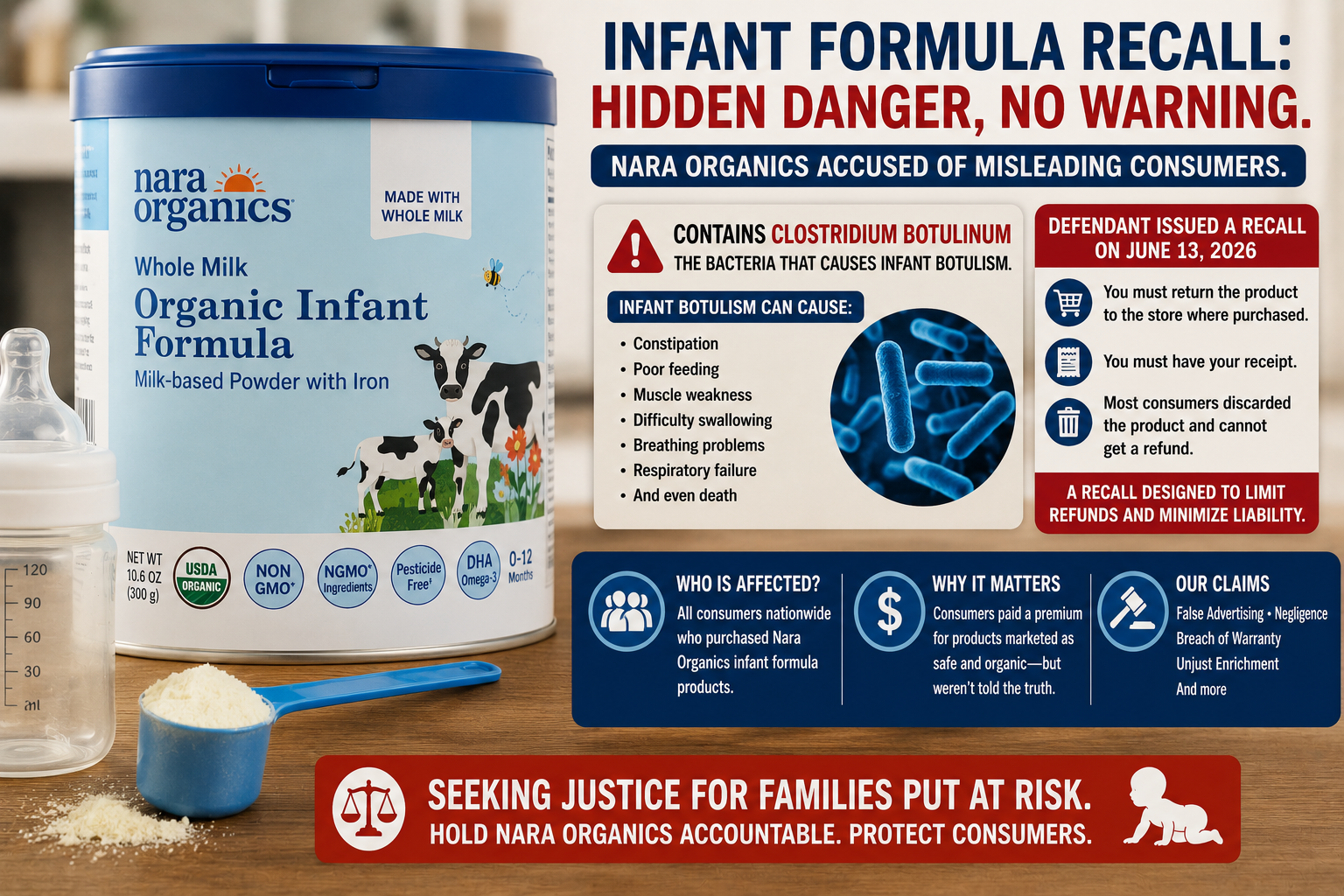
Nara Organics, Inc. is accused of deceptively marketing its infant formula products while allegedly failing to disclose that they contained, or were at risk of containing, Clostridium botulinum—a bacterium that can cause infant botulism. The lawsuit claims that the omission of this material safety risk misled consumers into believing the products were safe for infant consumption. Plaintiffs allege that consumers relied on the company’s labeling and marketing and paid a premium for products they believed were safe, when in reality they allegedly posed serious health risks.
ALLEGATIONS:
The lawsuit alleges that Nara Organics engaged in deceptive and misleading business practices by omitting critical safety information from the labeling and marketing of its infant formula products. Specifically, the complaint claims that the products contained, or were at risk of containing, Clostridium botulinum, a bacterium associated with infant botulism—a rare but potentially fatal illness.
According to the complaint, infant botulism can occur when spores of Clostridium botulinum are ingested and produce toxins in an infant’s digestive system. The lawsuit cites serious potential symptoms, including muscle weakness, difficulty feeding, respiratory issues, and in severe cases, respiratory arrest.
The plaintiffs allege that on June 12, 2026, the FDA notified the defendant of multiple cases of infant botulism linked to the consumption of the products. The complaint further states that the company subsequently issued a recall on June 13, 2026, after contamination concerns were identified.
Despite this, the lawsuit claims that Nara Organics failed to disclose the contamination risk on product packaging, which is the primary source of information consumers rely on when making purchasing decisions. As depicted in the product image on page 3 of the complaint, the packaging presents the formula as a standard organic infant product without any warning regarding potential contamination.
The plaintiffs contend that this omission is materially misleading because consumers reasonably expect infant formula to be safe and free from harmful substances. According to the complaint, the presence or risk of Clostridium botulinum would have been a critical factor influencing purchasing decisions, and consumers would not have purchased the product—or would have paid less—had they known the truth.
The lawsuit also alleges that the defendant had superior knowledge regarding the manufacturing process and potential contamination risks, as well as the ability to test for such contaminants before distributing the products. Despite this alleged knowledge, the company allegedly failed to warn consumers or adequately disclose the risk.
Additionally, the complaint criticizes the company’s recall process, alleging that it was inadequate and structured in a way that limited consumer refunds. According to the lawsuit, consumers were required to retain the product or provide proof of purchase to obtain a refund, which many consumers could not do after discarding the recalled formula.
The plaintiffs further allege that the products were effectively worthless due to the contamination risk and that consumers suffered economic harm by paying for products that did not meet safety expectations. The complaint claims that the defendant was able to charge a premium price based on its marketing while omitting material safety risks.
The lawsuit brings claims under New York consumer protection laws, the Illinois Consumer Fraud Act, and common law theories including negligence and unjust enrichment. The plaintiffs seek damages, restitution, injunctive relief, and corrective measures to prevent further alleged deception.

Leave a Reply