CASE INFORMATION
Case Name: G.A. Nelson v. Nara Organics, Inc. and Organic West Milk, Inc.
CASE NO. 1:26-cv-06850
JURISDICTION: UNITED STATES DISTRICT COURT FOR THE SOUTHERN DISTRICT OF NEW YORK
FILED ON: 08/11/26
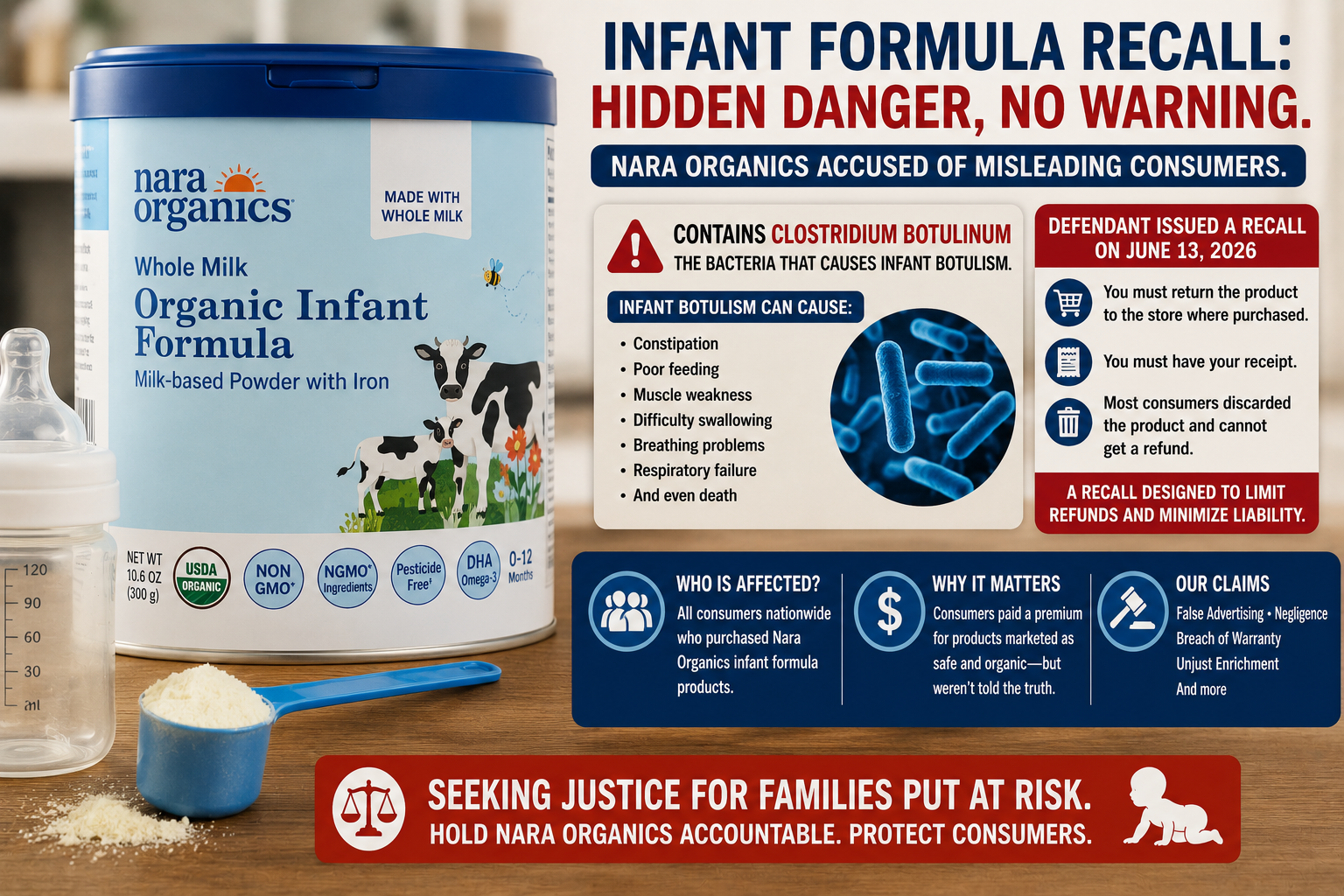
CLASS DEFINTION: Nationwide group of consumers, including a New York subclass, who purchased Nara Organics powdered infant formula products that allegedly contained or were at risk of containing the dangerous bacterium Clostridium botulinum and were marketed as safe for infant consumption.
SUMMARY
According to the complaint, Plaintiff G.A. Nelson brings a putative class action against Nara Organics, Inc. and Organic West Milk, Inc. on behalf of consumers who purchased Nara Organics powdered infant formula products that allegedly contained, or were at risk of containing, the dangerous bacterium Clostridium botulinum. The lawsuit alleges that these infant formula products were deceptively marketed and sold as safe for infant consumption, despite the supposed contamination risk. The complaint further alleges that consumers paid a price premium for these products, which were allegedly contaminated, worthless, and sold without adequate disclosure on the packaging or labeling about the potential contamination or associated risks. On this basis, the lawsuit seeks relief for a nationwide class of purchasers, including a New York subclass, claiming economic harm tied to these alleged misrepresentations and omissions.
ALLEGATIONS
According to the complaint, Nara Organics, Inc. and Organic West Milk, Inc. manufacture, market, and sell powdered infant formula products under the Nara Organics brand. The lawsuit alleges that these powdered infant formulas either contained, or were at significant risk of containing, the dangerous bacterium Clostridium botulinum, a pathogen associated with botulism, which can be especially hazardous to infants.
The complaint asserts that, despite this alleged contamination risk, Defendants marketed and labeled their powdered infant formula products as safe for infant consumption. According to the complaint, consumers were led to believe that the infant formula products met appropriate safety standards and were suitable and safe to feed to infants. The lawsuit alleges that the packaging, labeling, and overall marketing of Nara Organics powdered infant formula failed to disclose the existence or extent of any risk that the products could contain Clostridium botulinum.
The complaint further alleges that, as a result of these marketing and labeling practices, consumers, including Plaintiff and members of the putative nationwide and New York subclasses, paid a price premium for the Nara Organics powdered infant formula. According to the lawsuit, consumers believed they were purchasing safe, properly tested, and uncontaminated infant formula, and this belief was a material factor in their purchasing decisions. The complaint contends that, had consumers known about the alleged contamination or risk of contamination with Clostridium botulinum, they would not have purchased the products or would have paid significantly less.
The lawsuit alleges that the infant formula products at issue were, in fact, “worthless” to consumers because any infant formula that contains or risks containing a dangerous bacterium such as Clostridium botulinum is not fit for its intended purpose of safely nourishing infants. According to the complaint, the alleged failure to disclose this risk on the packaging or label deprived consumers of the opportunity to make an informed choice about whether to purchase and feed the product to their children.
The complaint also alleges that Defendants’ conduct was deceptive and misleading, asserting that Defendants created and maintained a false impression that the powdered infant formula products were safe, pure, and suitable for infant use. By allegedly omitting material information about the potential presence or risk of Clostridium botulinum, the lawsuit contends that Defendants misrepresented the true nature, quality, and safety of the products.
According to the complaint, members of the putative nationwide class and New York subclass suffered economic injury when they purchased the Nara Organics powdered infant formula products at prices that did not reflect the alleged contamination risk. The lawsuit claims that consumers did not receive the benefit of the bargain they believed they were obtaining because the products purportedly did not conform to the reasonable expectations created by Defendants’ marketing and labeling.
The complaint seeks to proceed on behalf of a nationwide class of consumers who purchased the affected powdered infant formula products, as well as a subclass of New York purchasers. According to the complaint, common questions among class members include:
- whether the products contained or were at risk of containing Clostridium botulinum;
- whether Defendants’ marketing and labeling were deceptive or misleading in light of that alleged risk;
- whether material information was omitted from the products’ packaging; and
- whether consumers paid a price premium or otherwise suffered economic harm as a result.
In sum, the lawsuit alleges that Nara Organics, Inc. and Organic West Milk, Inc. engaged in deceptive marketing and labeling practices by selling powdered infant formula products that allegedly contained or were at risk of containing Clostridium botulinum while presenting them as safe for infant consumption, causing consumers nationwide, including in New York, to pay more for products that were allegedly contaminated, worthless, and sold without adequate disclosure of the contamination risks.
Leave a Reply