CASE NAME: Nance v. The Kroger Co.
CASE NO.: 2:26-cv-08090
JURISDICTION: United States District Court, Central District of California
FILED ON: July 23, 2026
CLASS DEFINITION: All California consumers who purchased Kroger private-label products labeled “No Preservatives” or “No Artificial Preservatives” that allegedly contained preservative ingredients
SUMMARY:
The Kroger Co. is accused of falsely marketing numerous private-label food products as containing “No Preservatives” or “No Artificial Preservatives” despite allegedly including ingredients that function as preservatives. The lawsuit claims that these front-of-package statements mislead consumers into believing the products are free from additives, when in fact the ingredient lists disclose substances commonly used to preserve food. The plaintiff alleges that consumers relied on these representations and paid a premium for products they believed to be cleaner and more natural.
ALLEGATIONS:
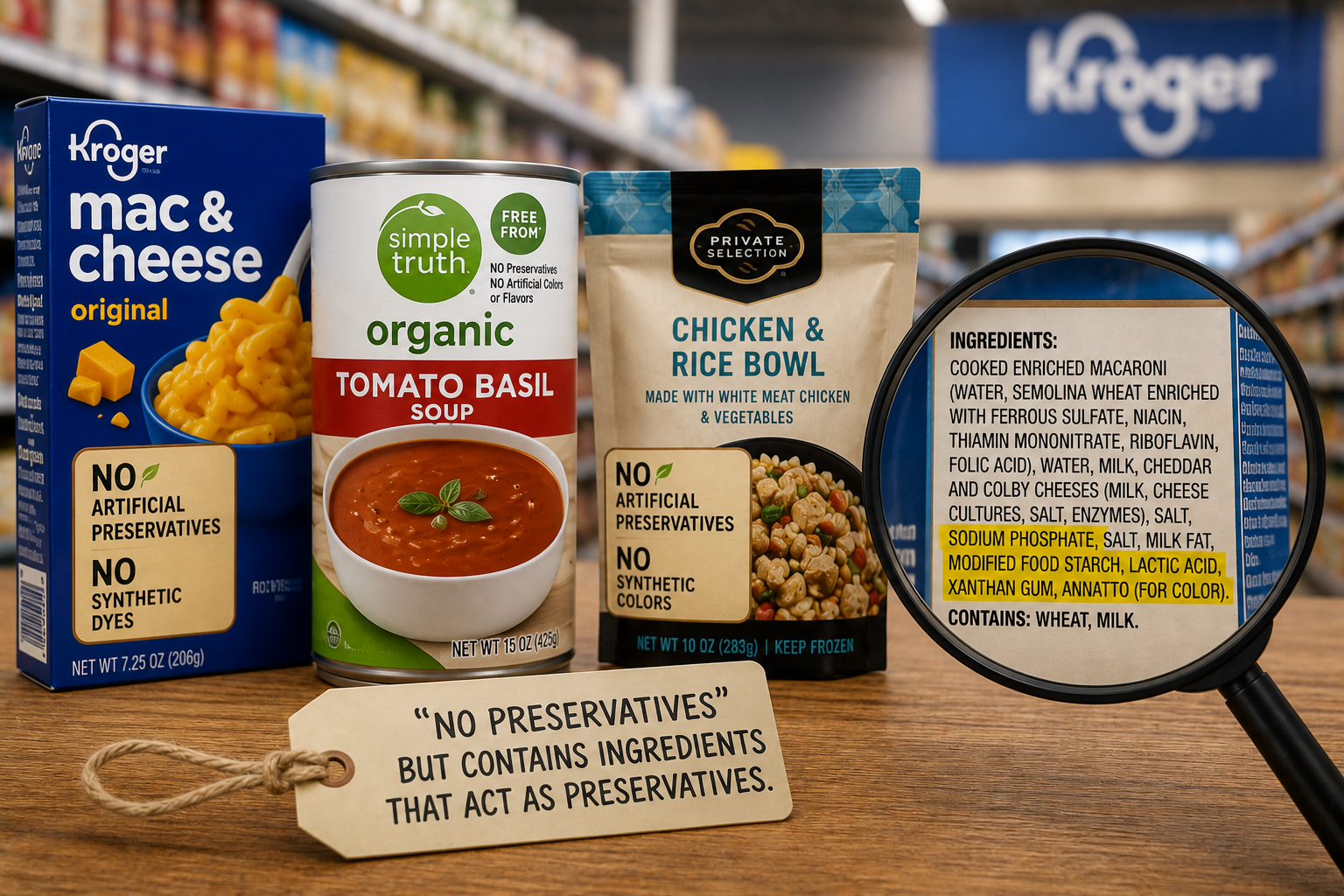
The lawsuit alleges that Kroger engaged in a widespread and uniform labeling practice across its private-label brands—including Kroger®, Private Selection®, Simple Truth®, and Simple Truth Organic®—by prominently displaying “No Preservatives” or “No Artificial Preservatives” claims on product packaging.
According to the complaint, these claims appear in bold, front-facing text intended to influence consumer purchasing decisions. However, the plaintiff contends that the ingredient lists on the back of the packaging contradict these representations by including additives such as citric acid, lactic acid, ascorbic acid, sodium citrate, sodium phosphate, disodium phosphate, natamycin, and sodium acid pyrophosphate. These ingredients allegedly function to preserve food by maintaining freshness, stabilizing texture, or preventing spoilage.
For example, as illustrated in the product images on pages 12–13 of the complaint, a Kroger macaroni and cheese product labeled “No Artificial Preservatives” allegedly contains sodium phosphate and lactic acid, while a Simple Truth Organic tomato basil soup labeled “No Preservatives” lists citric acid as an ingredient. The complaint asserts that such ingredients meet the regulatory definition of preservatives because they help prevent deterioration and extend shelf life.
The plaintiff alleges that this contradiction between front-of-package claims and ingredient disclosures creates a misleading impression for reasonable consumers. According to the complaint, shoppers are more likely to rely on prominent front-label claims and may not closely examine ingredient lists, particularly when the overall branding emphasizes “clean” and “natural” qualities.
The lawsuit further claims that Kroger’s marketing strategy capitalizes on growing consumer demand for foods perceived as natural and free from artificial additives. By labeling products as preservative-free, Kroger allegedly positioned its products as healthier and more desirable, allowing the company to charge higher prices.
The plaintiff contends that this practice was not isolated but instead applied consistently across dozens of products spanning multiple categories, including macaroni and cheese, rice dishes, soups, frozen meals, and salad dressings. This, according to the complaint, demonstrates a coordinated corporate strategy rather than incidental labeling errors.
Additionally, the complaint alleges that Kroger was aware—or should have been aware—that the ingredients used in its products function as preservatives, as the company both formulated the products and listed these ingredients on packaging. Despite this knowledge, Kroger allegedly continued to market the products as preservative-free.
The plaintiff claims she relied on these representations when purchasing Kroger products and would not have bought them, or would have paid less, had she known they contained preservatives. The complaint also alleges that consumers paid a price premium compared to similar products that do not make such claims.
The lawsuit brings claims under California’s Consumer Legal Remedies Act, False Advertising Law, and Unfair Competition Law, as well as claims for breach of warranty and unjust enrichment. The plaintiff seeks damages, restitution, injunctive relief, and corrective labeling to prevent further alleged deception.
Leave a Reply