
CASE NAME: Thomas v. General Mills, Inc.
CASE NO.: Not specified
JURISDICTION: Superior Court of the State of California, County of Los Angeles
FILED ON: July 6, 2026
CLASS DEFINITION: All persons in California who purchased Cheerios Protein cereal products for personal or household use during the applicable class period
SUMMARY:
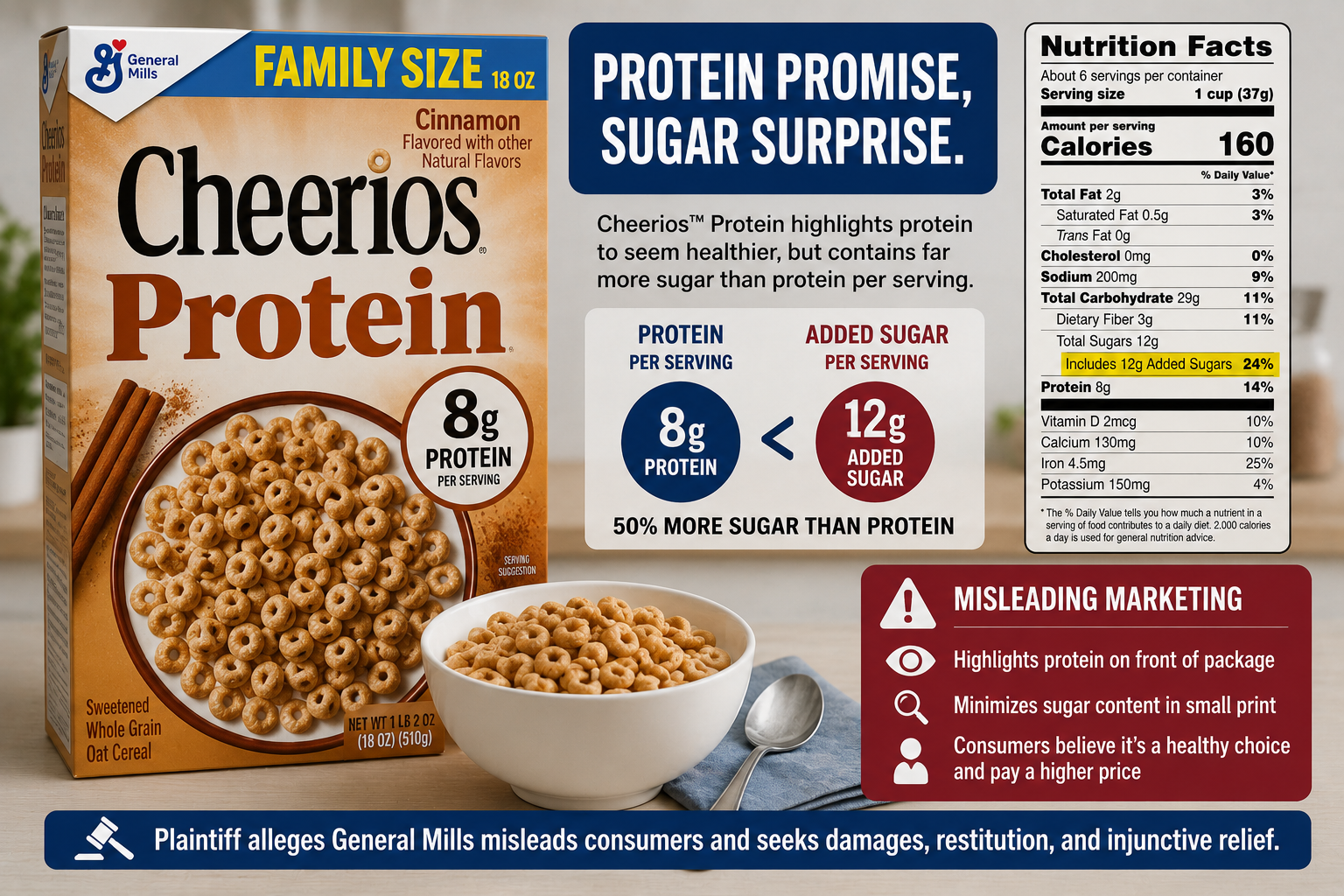
General Mills, Inc. is accused of misleading consumers by marketing its “Cheerios Protein” cereal as a healthy, protein-rich food while allegedly failing to adequately disclose that the product contains high levels of added sugar. The lawsuit claims that the company’s labeling and advertising create a “health halo” that emphasizes protein content while downplaying or omitting the cereal’s sugar content. The plaintiff alleges that consumers relied on these representations and paid a premium for a product they believed to be a healthier option, when in reality its nutritional profile allegedly contradicts those claims.
ALLEGATIONS:
The lawsuit alleges that General Mills engaged in a deceptive and misleading marketing campaign centered on its Cheerios Protein product line, which includes flavors such as cinnamon, strawberry, and cookies & crème. According to the complaint, the product packaging prominently displays the word “Protein” in bold lettering and highlights that the cereal contains eight grams of protein per serving, creating the impression that it is a nutritionally beneficial choice.
However, the plaintiff contends that this emphasis on protein is misleading because the cereal allegedly contains significantly more sugar than protein. The complaint states that the product contains approximately 50% more sugar than protein per serving. For example, certain flavors reportedly contain between 11 and 12 grams of added sugar per serving, which represents a substantial portion of the recommended daily sugar intake.
According to the complaint, the American Heart Association recommends that women and children limit added sugar intake to 24 grams per day and men to 36 grams per day. The lawsuit alleges that a single serving of the cereal accounts for roughly half of the recommended daily limit for some consumers, raising concerns about the product’s overall health profile.
The plaintiff further alleges that General Mills’ labeling creates a false impression that the cereal promotes health and wellness due to its protein content, when in fact the product’s primary ingredient is sugar. The complaint asserts that this marketing strategy constitutes a “health halo,” where positive attributes are highlighted to distract from less favorable nutritional characteristics.
In addition, the lawsuit claims that important nutritional information—such as sugar content—is presented in smaller, less noticeable font compared to the prominent protein claims on the front of the packaging. According to the complaint, this design allegedly prevents consumers from fully understanding the product’s nutritional composition at the point of purchase.
The plaintiff alleges that reasonable consumers rely on front-of-package labeling when making purchasing decisions and would interpret the “Protein” branding to mean the product is a healthier cereal option. The complaint states that consumers would not expect a product marketed in this way to contain such high levels of added sugar.
The lawsuit also claims that General Mills was aware of consumer demand for high-protein foods and intentionally leveraged this trend to increase sales. According to the complaint, protein content is a material factor influencing purchasing decisions, and the company allegedly used this to its advantage while failing to adequately disclose the product’s sugar content.
As a result of these alleged misrepresentations, the plaintiff claims that consumers were misled into purchasing the cereal and suffered economic harm by paying more for a product that did not meet their expectations. The complaint asserts that consumers would not have purchased the product, or would have paid less, had they known the true nutritional profile.
The lawsuit brings claims under California’s Consumer Legal Remedies Act, False Advertising Law, and Unfair Competition Law, as well as other related statutes. The plaintiff seeks damages, restitution, injunctive relief, and corrective advertising to address the alleged deceptive practices.

Leave a Reply