
Case Details
- CASE NAME: Mirziani vs Magic Spoon, Inc.
- CASE NO.: 1:26-cv-07075
- JURISDICTION: United States District Court for the Southern District of New York
- FILED ON: 08/19/26
Class Definition
Consumers who purchased Magic Spoon cereals marketed as containing “0g Total Sugars per Serving” even though the products allegedly contain allulose that should be treated as sugar under federal and California law.
Summary
According to the complaint, Magic Spoon cereals are marketed and sold as having “0g Total Sugars per Serving,” leading reasonable consumers to believe that the products contain no sugar at all. The lawsuit alleges that, in reality, the cereals contain between 5 and 10 grams of allulose per serving, which the plaintiff contends is a sugar under federal and California law. Magic Spoon reinforces the “zero sugar” message with comparison charts contrasting its cereals with conventional, higher‑sugar brands, while relegating any mention of allulose and related FDA guidance to small print that consumers are unlikely to notice or understand. As a result, the lawsuit claims the cereals are misbranded under federal and California food-labeling rules and that consumers paid a premium price for products that were not as advertised.
Allegations
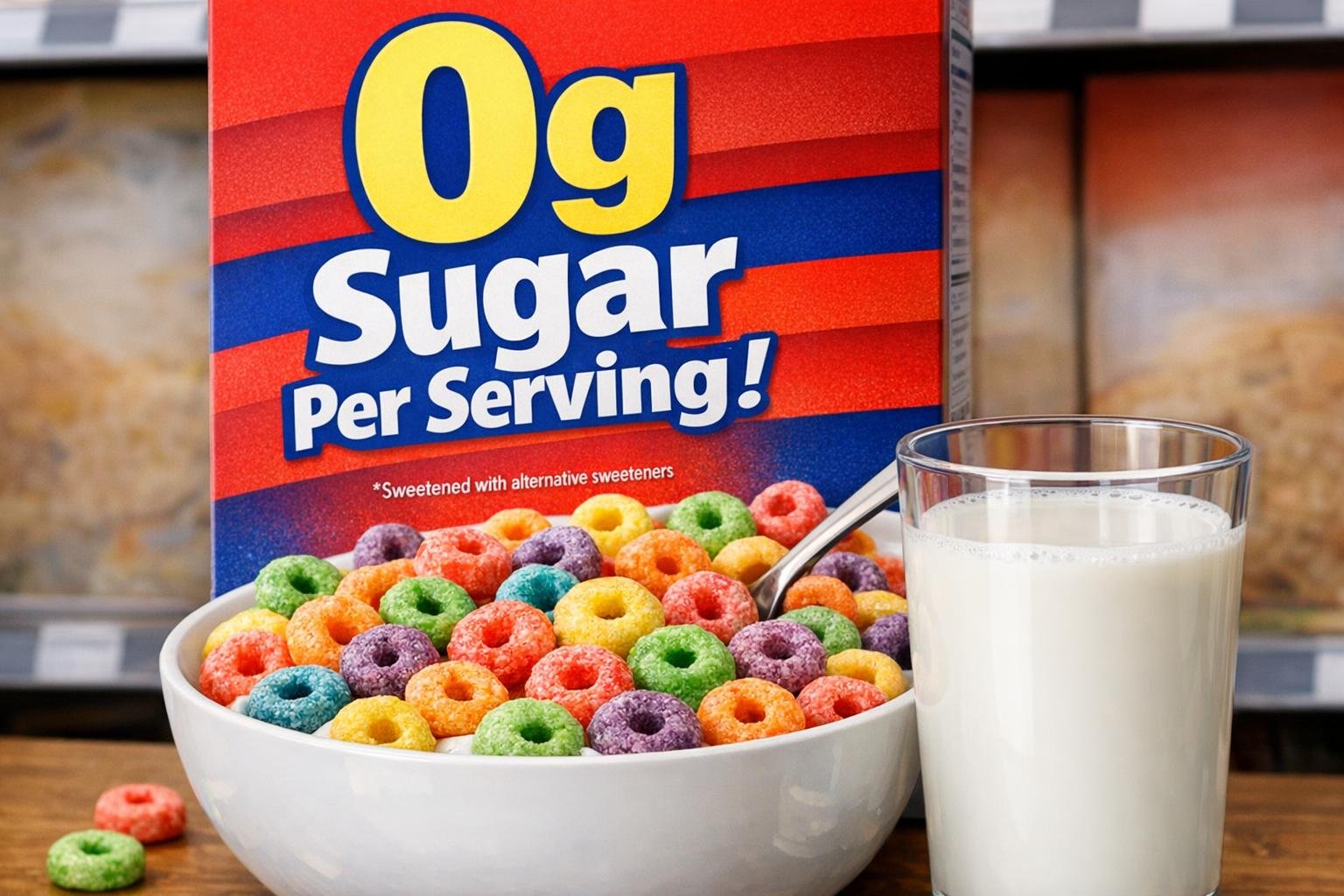
According to the complaint, this case centers on the marketing, packaging, and labeling of Magic Spoon brand breakfast cereals. The plaintiff alleges that Magic Spoon prominently represents on its front packaging and in its advertising that the cereals contain “0g Total Sugars per Serving.” These statements are allegedly a core component of Magic Spoon’s branding, positioning the products as a health‑oriented alternative to conventional cereals perceived as high in sugar.
The lawsuit alleges that these “0g sugar” representations are misleading because the cereals actually contain between 5 and 10 grams of allulose per serving. The complaint asserts that allulose is a form of sugar within the meaning of federal and California law and therefore should not be disregarded when representing total sugar content to consumers. According to the plaintiff, by focusing on “0g Total Sugars” while containing significant amounts of allulose, Magic Spoon creates a false impression that the cereals are free of sugar.
The complaint further alleges that Magic Spoon reinforces this impression through comparison charts that juxtapose its cereals with popular, conventional cereals known to contain higher levels of sugar. These charts purportedly highlight Magic Spoon’s “0g Total Sugars” claim alongside much larger sugar numbers for the comparison cereals, thereby underscoring the idea that Magic Spoon products have no sugar at all. According to the lawsuit, these visual comparisons are central to Magic Spoon’s marketing strategy and are likely to influence consumer purchasing decisions.
At the same time, the plaintiff contends that Magic Spoon relies on small-print disclosures referencing FDA guidance on allulose to justify its labeling. The complaint alleges that the company cites FDA policy allowing allulose not to be counted as “total sugars” or “added sugars” for Nutrition Facts Panel purposes. However, the plaintiff asserts that these references are buried in fine print and are not adequately disclosed or explained in a manner that a reasonable consumer would notice or understand. According to the complaint, consumers are not expected to parse regulatory guidance or distinguish between technical labeling rules and the plain meaning of “sugar” as they understand it in everyday language.
The lawsuit alleges that, taken together, the bold “0g Total Sugars per Serving” claim, the comparative sugar charts, and the downplayed allulose disclosures mislead reasonable consumers into believing that Magic Spoon cereals contain no sugar whatsoever. The plaintiff claims that consumers seeking to avoid sugar, reduce sugar intake, or purchase “sugar-free” products are particularly likely to rely on these representations.
According to the complaint, this discrepancy between the marketing message and the actual product composition renders the cereals “misbranded” under federal food-labeling regulations and parallel California food-labeling laws. The plaintiff alleges that Magic Spoon’s labeling and advertising are unlawful, unfair, and deceptive because they fail to accurately convey the presence and amount of allulose, which the plaintiff argues should be treated as sugar for purposes of consumer understanding and state law.
The lawsuit further alleges that consumers, including the plaintiff, paid a price premium for Magic Spoon cereals based on the belief that the products contained no sugar. According to the complaint, Magic Spoon charges higher prices than many conventional cereals, and that premium is allegedly tied to its “zero sugar” positioning and health-focused marketing. The plaintiff claims that had consumers known that the cereals contained 5 to 10 grams of allulose per serving, they would not have purchased the products on the same terms or at the same price, or might not have purchased them at all.
As a result of these alleged misrepresentations and omissions, the complaint seeks relief on behalf of purchasers of Magic Spoon cereals labeled with “0g Total Sugars per Serving,” asserting that these consumers were misled about the sugar content of the products and were financially harmed by paying more than the cereals were actually worth in light of their true composition.

Leave a Reply