
Fighting the Global Prevalence of
Adulterated Botanical Ingredients for Cosmetics
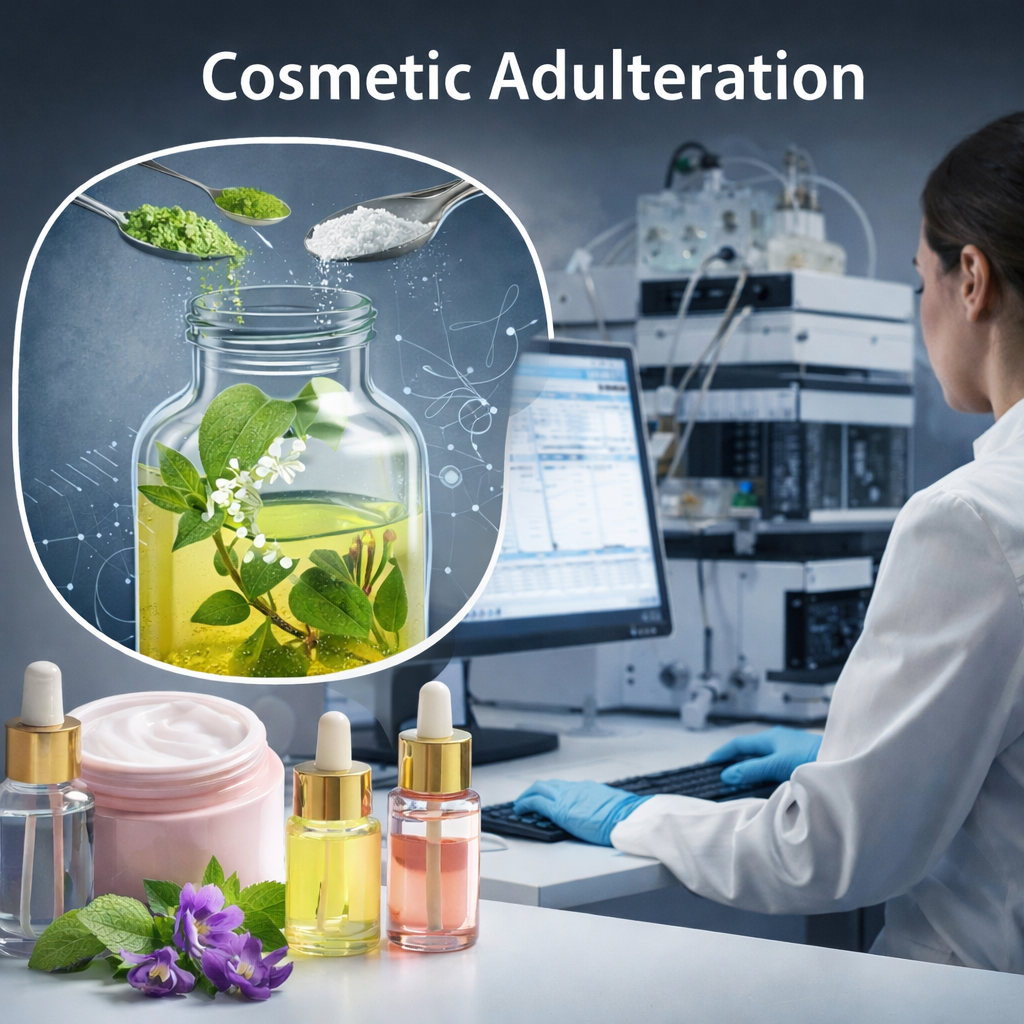
Botanical ingredients have become a cornerstone of modern consumer products. Plant-derived extracts are widely used in cosmetics, dietary supplements, and personal care formulations, often marketed as natural and beneficial alternatives to synthetic ingredients. But the rapid growth of this market has created a serious challenge: botanical adulteration.
A recent scientific review titled “Exhaustive Analytical Profiling of Phytocompounds in Botanical Active Ingredients: Fighting the Global Prevalence of Adulterated Botanical Ingredients for Cosmetics” examines how and why botanical adulteration occurs and explores the advanced analytical techniques needed to detect it. The authors conclude that ensuring the authenticity of plant-derived ingredients requires a far more comprehensive analytical approach than many companies currently employ.
Why botanical authenticity matters
Botanical extracts are used because of the biologically active compounds they contain. These compounds—often referred to as phytochemicals or phytocompounds—are responsible for the intended effects of the ingredient. When botanical materials are diluted, substituted, or contaminated, the product may lose its effectiveness or even present safety risks.
The study emphasizes that maintaining the authenticity of botanical ingredients is essential not only for product quality but also for consumer safety, regulatory compliance, and trust. Adulteration can occur at multiple stages in the supply chain, from raw plant material sourcing to extract processing and formulation.
Several factors drive adulteration. Rising demand for botanical ingredients often leads to supply shortages and higher prices. This creates incentives for suppliers to substitute cheaper plant species, dilute extracts, or add isolated compounds that mimic the chemical profile of the authentic ingredient.
Common forms of botanical adulteration
The paper highlights several types of adulteration commonly seen in botanical products.
One common method is species substitution, where a cheaper plant species is used in place of the authentic one. This can occur accidentally through misidentification or intentionally as a cost-saving measure.
Another common practice is dilution, where genuine botanical extracts are mixed with lower-cost materials. In some cases, manufacturers may add purified compounds to make the extract appear chemically similar to the authentic product.
For example, the authors note that Ginkgo biloba extracts may be adulterated with isolated flavonols such as quercetin or rutin, which can artificially mimic the expected chemical profile. Similarly, turmeric extracts may be adulterated with synthetic curcumin, and Boswellia resin extracts can be replaced with extracts from different Boswellia species.
These practices can be difficult to detect using simple testing methods.
Why traditional testing methods can miss adulteration
Many companies rely on relatively simple analytical techniques to verify botanical ingredients. These methods can provide useful initial screening but often examine only a limited portion of the chemical composition.
For example, UV-visible spectrophotometry is widely used because it is inexpensive and easy to perform. However, it lacks specificity, meaning that extracts from different plants can produce similar results if they contain similar classes of compounds.
Similarly, thin-layer chromatography (TLC) and high-performance thin-layer chromatography (HPTLC) are widely used fingerprinting techniques included in many pharmacopoeias. While useful, these methods focus on specific chemical markers and may miss other forms of adulteration or substitution.
As the authors note, adulterators can sometimes manipulate extracts so that they still pass these standard tests.
The need for comprehensive analytical profiling
To address these challenges, the researchers advocate for “exhaustive analytical profiling”—a multi-layered approach that combines several analytical technologies to characterize botanical ingredients more completely.
These techniques include:
- High-performance liquid chromatography (HPLC / UHPLC) for separating and identifying complex mixtures of phytochemicals
- Gas chromatography coupled with mass spectrometry (GC-MS) for analyzing volatile compounds such as essential oils
- Metabolomic profiling, which examines the full spectrum of metabolites present in a plant extract
- Isotopic analysis, which can help identify synthetic compounds or determine geographic origin
- Genetic testing, which can confirm the botanical species used in the ingredient
Each method captures a different part of the chemical profile. When used together, they provide a far more reliable way to detect adulteration.
For instance, gas chromatography techniques are particularly useful for identifying adulteration in volatile botanical extracts such as essential oils. However, because these methods focus only on volatile compounds, they must be paired with techniques such as LC-MS that analyze non-volatile molecules.
A supply chain problem
The authors emphasize that botanical authentication cannot rely solely on final product testing. Instead, it must involve quality control throughout the supply chain, from plant harvesting and raw material identification to extract production and formulation.
This requires standardized analytical methods and stronger oversight across the industry.
The study also highlights the role of cosmetovigilance and nutrivigilance—systems designed to monitor product safety and detect potential issues after products reach the market.
The future of botanical authentication
Looking ahead, the authors suggest that emerging technologies may help improve botanical authentication. Advances in metabolomics, large chemical databases, and artificial intelligence could make it easier to detect subtle chemical differences between authentic and adulterated products.
As the global market for plant-based products continues to grow, the importance of these technologies will only increase.
For consumers and regulators alike, the key takeaway is clear: verifying the authenticity of botanical ingredients requires rigorous, multi-method scientific analysis. Without it, adulteration can remain hidden in the supply chain—undermining product quality and consumer trust.
A full copy of the article can be obtained HERE

Leave a Reply