
CASE NAME: Mike Andrich and Natalie Gianne v. Cento Fine Foods, Inc.
CASE NO.: 4:26-cv-04012-YGR
JURISDICTION: United States District Court for the Northern District of California
FILED ON: May 4, 2026
CLASS DEFINITION: All persons in the United States who purchased Cento San Marzano tomatoes for personal or household use from January 1, 2016 to the present.
SUMMARY:
Cento Fine Foods, Inc. is facing a proposed class action lawsuit alleging that it falsely markets its canned tomatoes as “Certified San Marzano” despite not meeting the official standards required for authentic San Marzano tomatoes. The lawsuit claims that Cento’s products are not certified by the official Italian regulatory body and do not possess the origin or quality associated with true San Marzano tomatoes. Plaintiffs allege that consumers were misled into paying premium prices based on these representations and would not have purchased the products, or would have paid less, had they known the truth.
ALLEGATIONS:
The complaint alleges that Cento markets its products as “Certified San Marzano” tomatoes, a designation that carries significant meaning for consumers. According to the lawsuit, authentic San Marzano tomatoes must be grown and processed in a specific region of Italy and certified by an official consortium authorized by the European Union. These tomatoes are considered premium products due to their unique characteristics, including firm flesh, fewer seeds, and a balanced flavor profile.
However, the plaintiffs contend that Cento’s products do not meet these standards. The complaint alleges that Cento is not certified by the official consortium responsible for San Marzano designation, and instead relies on a separate third-party entity, Agri-Cert, which plaintiffs claim lacks authority to confer authentic certification status. As a result, the lawsuit alleges that Cento’s “Certified” labeling is misleading and falsely implies official recognition.
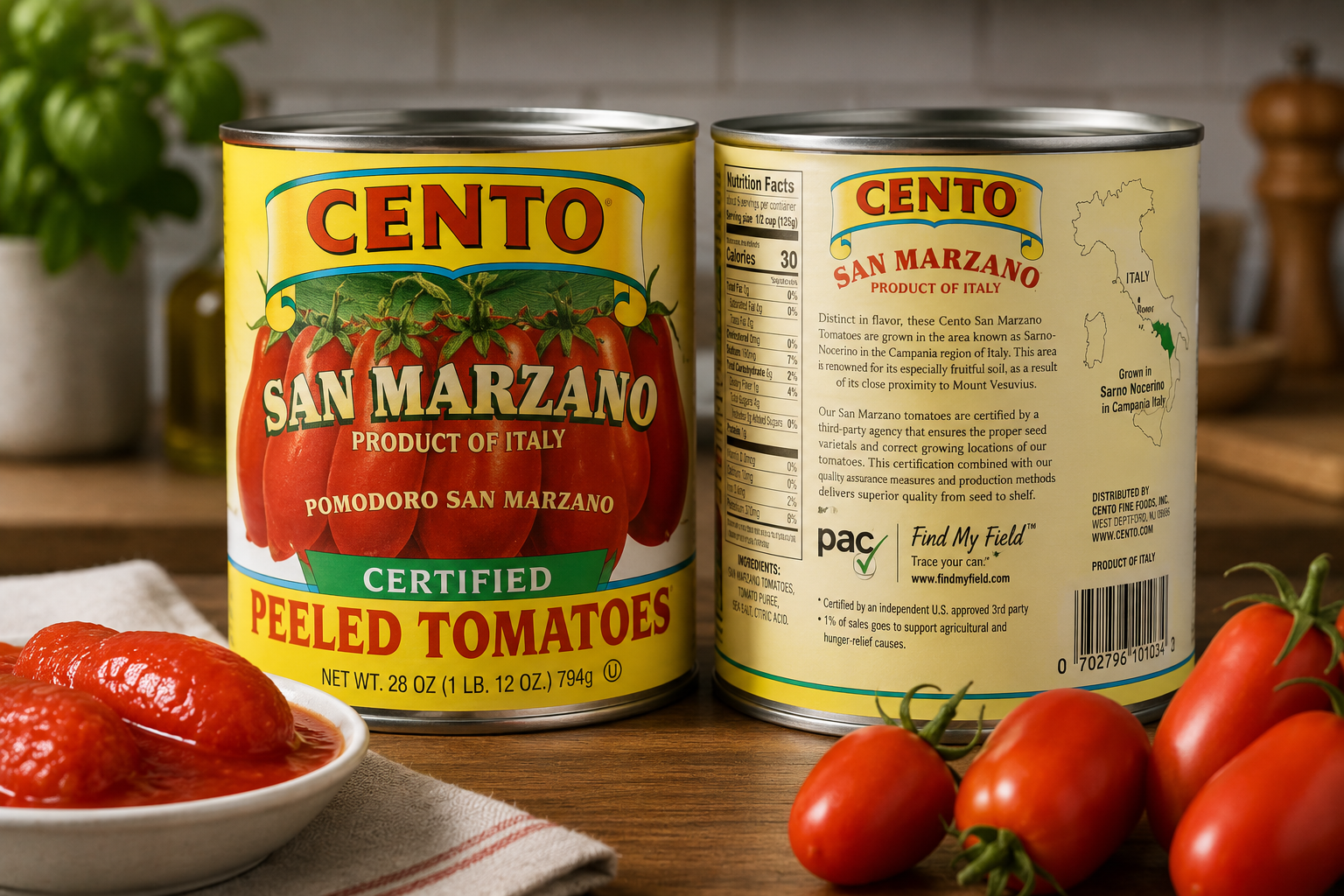
The complaint further alleges that Cento intentionally designs its packaging to mimic authentic San Marzano labels. As depicted in product images included in the complaint (page 8), Cento’s cans prominently display “Certified” and “San Marzano,” along with imagery and formatting similar to genuine DOP-certified products. Plaintiffs claim this visual presentation is intended to mislead consumers into believing the products are equivalent to officially certified San Marzano tomatoes.
Additionally, the lawsuit asserts that Cento emphasizes connections to the Italian region associated with authentic San Marzano tomatoes, including maps and statements about growing conditions. According to the complaint, these representations reinforce the misleading impression that the tomatoes originate from the protected region and meet strict quality standards, even though they allegedly do not.
The complaint also details Cento’s historical relationship with the official certification body. According to the lawsuit, Cento was previously a member of the consortium but was removed around 2011 following allegations of fraud. The complaint further references past investigations and legal findings in Italy involving counterfeit labeling practices connected to Cento’s operations, which plaintiffs claim demonstrate a pattern of deceptive conduct.
The lawsuit further alleges that Cento’s marketing extends beyond packaging to its website and online listings, where it promotes the tomatoes as authentic and superior products. Statements highlighted in the complaint claim the tomatoes follow strict guidelines, are grown in the proper region, and meet high certification standards. Plaintiffs contend these claims are false and contribute to consumer deception.
According to the complaint, Cento sells its products at a premium price comparable to genuine San Marzano tomatoes. Plaintiffs allege that consumers rely on certification claims when making purchasing decisions and that the misleading labeling caused them to overpay for products that lack the advertised qualities.
The plaintiffs claim they purchased the products multiple times based on these representations and were dissatisfied upon learning they were not authentic San Marzano tomatoes. The complaint asserts that consumers suffered economic injury by paying more for products that did not meet expected standards.
Based on these allegations, the lawsuit asserts violations of California’s Unfair Competition Law, False Advertising Law, and Consumers Legal Remedies Act. Plaintiffs seek damages, restitution, injunctive relief, and an order requiring corrective advertising.


Leave a Reply