
CASE NAME: Scott v. Grüns Nutrition, Inc.
CASE NO.: 2:26-cv-08019
JURISDICTION: United States District Court, Central District of California
FILED ON: July 22, 2026
CLASS DEFINITION: All individuals in the United States who purchased Grüns “Superfoods Greens Gummies,” with a California subclass for in-state purchasers
SUMMARY:
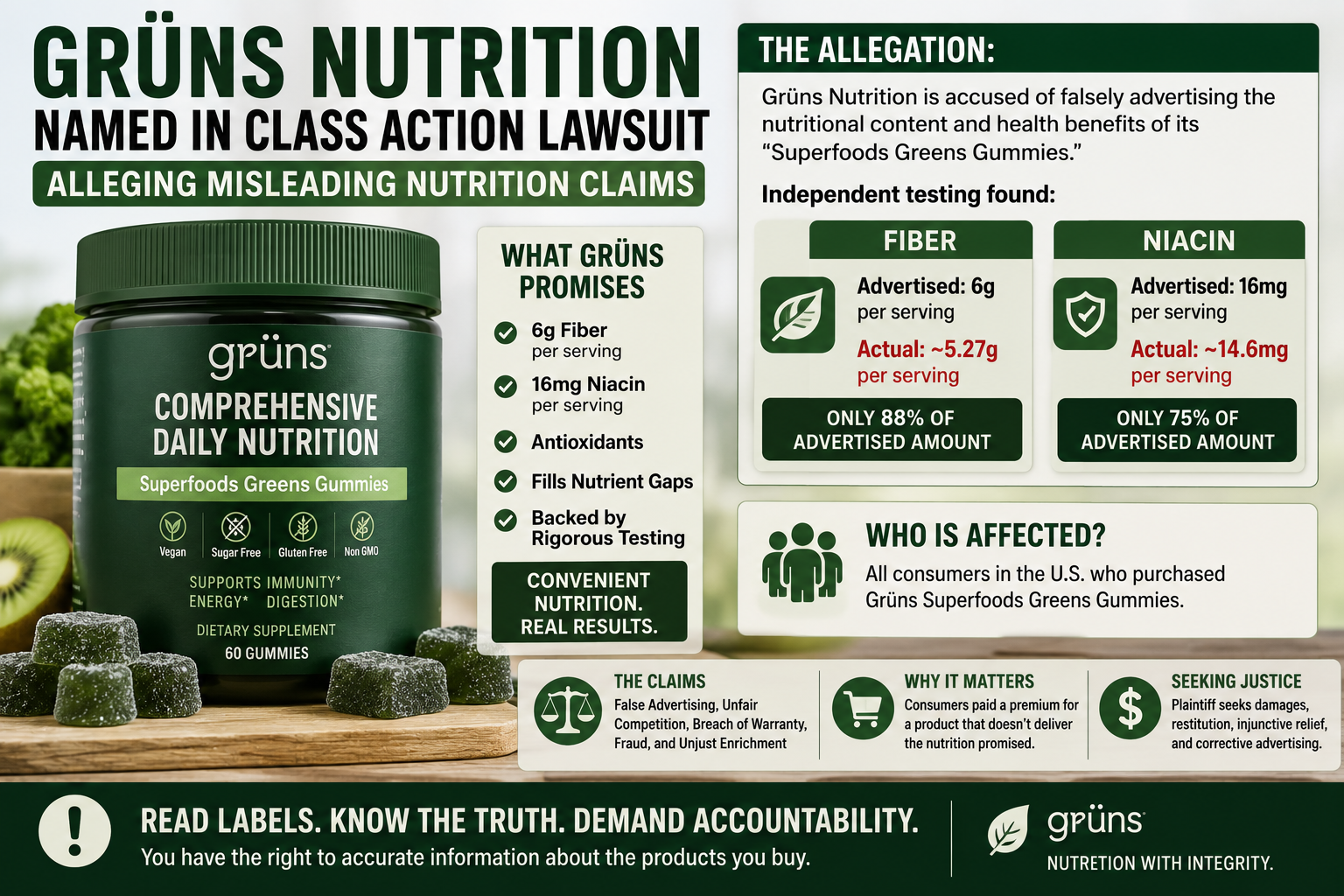
Grüns Nutrition, Inc. is accused of falsely advertising its “Superfoods Greens Gummies” by overstating their nutritional content and health benefits. The lawsuit alleges that the company marketed the product as providing “comprehensive daily nutrition” and filling dietary gaps, including claims that each serving contains 6 grams of fiber and 16 milligrams of niacin. However, independent testing allegedly found that the product contains significantly less of these nutrients. Plaintiffs contend that these misrepresentations misled consumers into believing the product delivered greater health benefits than it actually did, causing them to pay a premium.
ALLEGATIONS:
The lawsuit alleges that Grüns Nutrition engaged in a deceptive marketing campaign centered around its dietary supplement product, “Superfoods Greens Gummies.” According to the complaint, the company promoted the product across its packaging, website, and advertising channels—including social media and online retailers—emphasizing convenience and the ability to “fill nutrient gaps” in consumers’ diets.
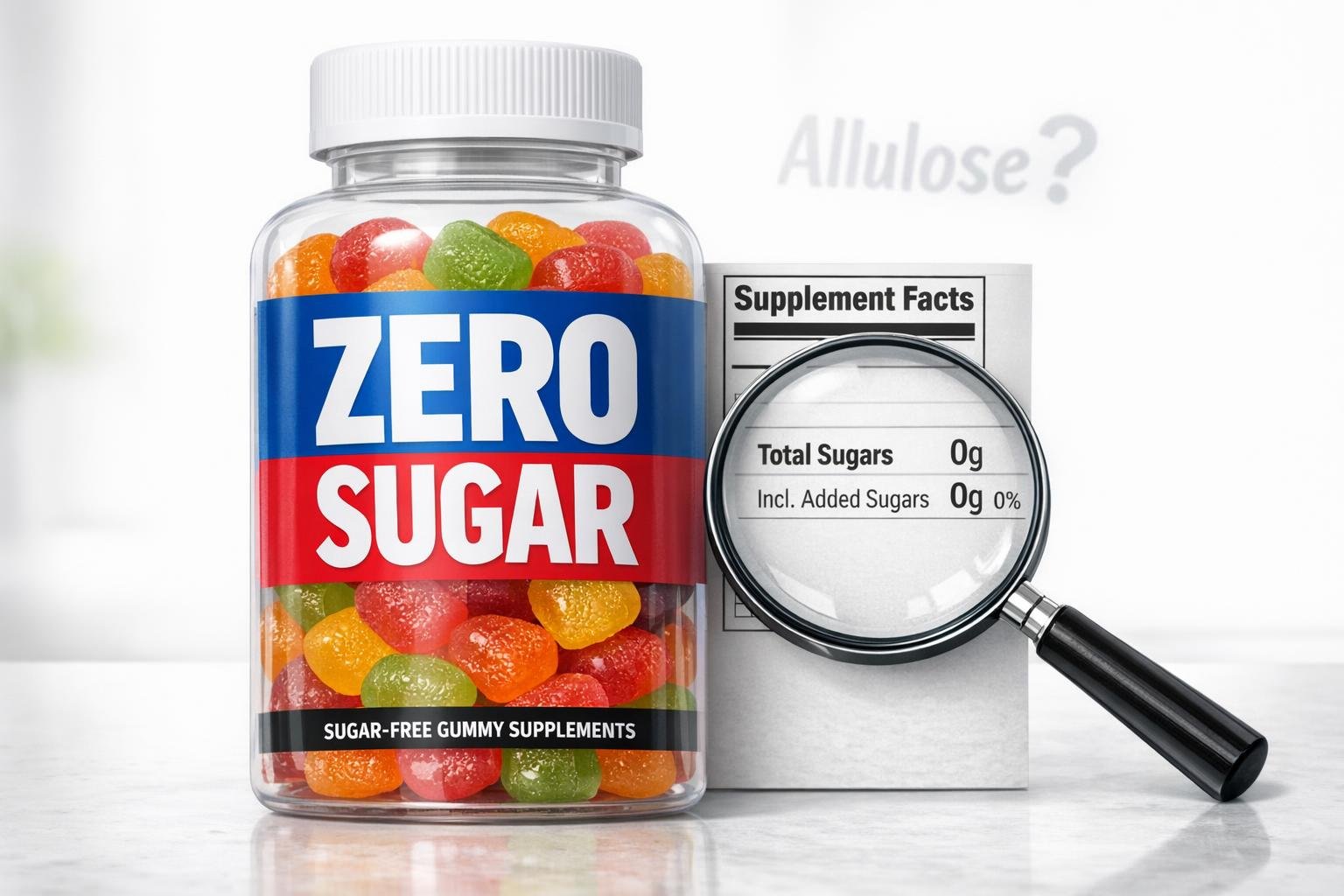
The plaintiff claims she purchased the product after reviewing its labeling and marketing, which represented that it was vegan, sugar-free, gluten-free, and contained key nutritional benefits such as 6 grams of dietary fiber and antioxidants. The complaint also alleges that the company marketed the product as being supported by “rigorous testing” and third-party validation of its nutritional claims.
However, the lawsuit contends that these claims are inaccurate. According to the complaint, independent testing revealed that each serving contains only approximately 5.27 grams of dietary fiber and 14.6 milligrams of niacin—amounting to about 88% and 75% of the labeled values, respectively. The plaintiff alleges that these discrepancies render the product’s labeling false and misleading, particularly because fiber and niacin are classified as key nutrients that must meet labeled amounts.
The complaint further alleges that these inaccuracies undermine the product’s central marketing message—that it provides “comprehensive daily nutrition” and helps consumers meet their dietary needs. By failing to deliver the advertised nutrient levels, the product allegedly cannot perform as promised.
In addition to nutrient discrepancies, the lawsuit challenges the product’s labeling of a “Core Nutrients Blend.” According to the complaint, this blend is presented in a way that does not comply with FDA labeling requirements, as it lacks sufficient detail about its composition and the specific plant parts used. The plaintiff alleges that this vague labeling creates confusion and gives the impression of a scientifically advanced formulation without substantiation.
The plaintiff also claims that Grüns Nutrition’s emphasis on testing and quality assurance exacerbates the alleged deception. By asserting that its products undergo “rigorous testing” and third-party validation, the company allegedly reinforces consumer trust while simultaneously providing inaccurate nutritional information.
According to the complaint, these representations were material to consumers’ purchasing decisions. The plaintiff alleges that she and other consumers relied on the advertised nutritional content and health benefits when deciding to buy the product and would not have purchased it—or would have paid less—had they known the true values.
The lawsuit further claims that the defendant’s conduct constitutes a broader pattern of misleading advertising designed to gain a competitive advantage in the growing market for health supplements. By overstating nutritional benefits and presenting the product as a convenient alternative to traditional nutrition sources, the company allegedly capitalized on consumer demand for easy health solutions.
The complaint brings claims under California’s False Advertising Law, Consumer Legal Remedies Act, and Unfair Competition Law, as well as claims for breach of express and implied warranties, fraud, and unjust enrichment. The plaintiff seeks damages, restitution, injunctive relief, and corrective advertising to address the alleged misrepresentations and prevent future consumer deception.

Leave a Reply