CASE NAME: Shelby Cooper, et al. v. Lume Deodorant, LLC
CASE NO.: 1:26-cv-5309
JURISDICTION: United States District Court for the Southern District of New York
FILED ON: June 24, 2026
CLASS DEFINITION: The lawsuit seeks to represent a nationwide class of all persons who purchased the challenged Lume or Mando “Unscented” deodorant products for personal or household use during the four years preceding the filing of the complaint through the date class notice is provided, as well as a California subclass of purchasers.
SUMMARY:
A proposed class action alleges that Lume Deodorant, LLC falsely markets certain Lume and Mando deodorants as “Unscented” even though they allegedly contain an added fragrance ingredient known as Floral Pyranol. According to the complaint, reasonable consumers understand an “Unscented” claim to mean that a product contains no fragrance, particularly because many consumers intentionally seek fragrance-free personal care products due to skin sensitivities, allergies, workplace fragrance restrictions, or personal preference. The plaintiffs contend they paid a premium for deodorants they believed were fragrance-free and would not have purchased the products, or would have paid less for them, had they known the products allegedly contained fragrance.
ALLEGATIONS:
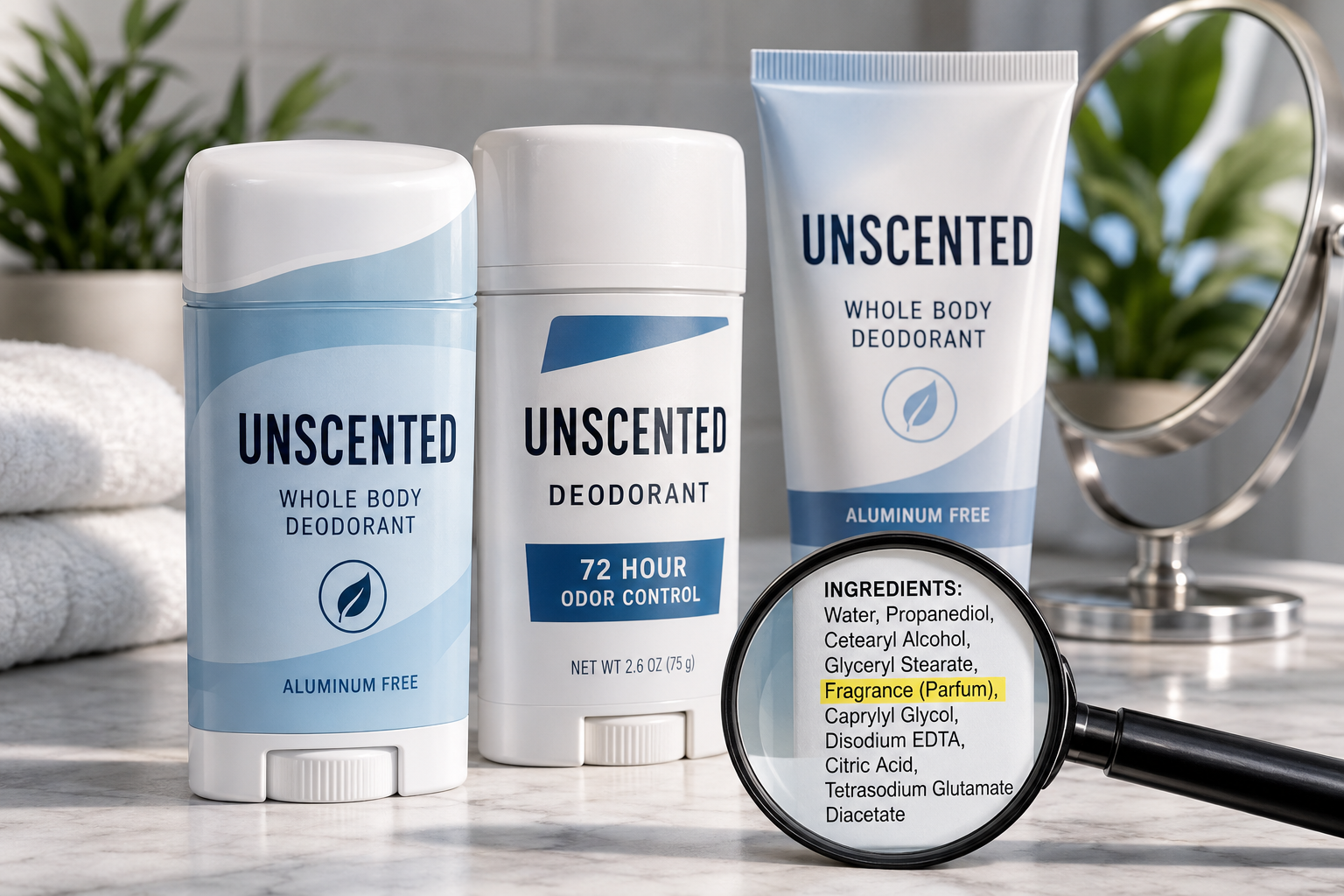
According to the complaint, Lume manufactures and sells whole-body deodorants under the Lume brand and similar products under its Mando brand. The lawsuit challenges multiple deodorant products prominently labeled “Unscented” on the front packaging.
The plaintiffs allege that consumers reasonably interpret the word “Unscented” to mean that a product is free of fragrance ingredients. The complaint states that demand for fragrance-free personal care products has increased as consumers become more aware of potential skin irritation and allergies associated with fragrance ingredients. It further alleges that individuals with sensitive skin, fragrance allergies, respiratory conditions, or workplace fragrance restrictions often specifically seek out unscented products.
According to the lawsuit, despite the prominent “Unscented” representation on the front label, the products contain Floral Pyranol, which the complaint describes as a synthetic aroma chemical used in fragrance formulations. The plaintiffs allege that because Floral Pyranol functions as a fragrance ingredient, products containing it cannot accurately be described as unscented.
The complaint further alleges that the ingredient appears only within the products’ lengthy ingredient lists using its chemical name. According to the plaintiffs, most consumers do not carefully review lengthy ingredient panels before purchasing deodorant products, and even those who do would not recognize Floral Pyranol as a fragrance ingredient. As a result, the lawsuit contends that consumers are unlikely to discover the alleged inconsistency between the front-label “Unscented” claim and the ingredient list before making a purchase.
The named plaintiffs allege they each purchased one of the challenged products because they were specifically seeking deodorants that were free of fragrance. Plaintiff Shelby Cooper alleges she purchased Lume Unscented deodorant at retail stores in California, while plaintiff Jeffrey Ligerman alleges he purchased Mando Unscented deodorant through the company’s website. Both plaintiffs claim they relied on the “Unscented” representation when making their purchasing decisions and did not notice the Floral Pyranol ingredient prior to purchase.
According to the complaint, the plaintiffs suffered economic injury because they paid more for the products than they otherwise would have if the products had not been marketed as unscented. The lawsuit alleges that the products commanded a price premium due to the allegedly misleading labeling and that consumers either would have paid less or declined to purchase the products altogether had they known the deodorants allegedly contained fragrance.
The complaint also alleges that Lume benefited financially by increasing sales and market share through the challenged labeling. The plaintiffs contend that the company’s marketing practices enabled it to capitalize on growing consumer demand for fragrance-free personal care products while selling products that allegedly did not meet consumers’ expectations for truly unscented deodorants.
Based on these allegations, the lawsuit asserts claims under California’s Unfair Competition Law, False Advertising Law, and Consumers Legal Remedies Act, along with claims for breach of express warranty, breach of the implied warranty of merchantability, and common law fraud. The plaintiffs seek certification of a nationwide class and California subclass, injunctive relief prohibiting the continued use of the challenged labeling, restitution, compensatory and punitive damages where permitted, attorneys’ fees, costs, and other relief the court deems appropriate.
Leave a Reply