
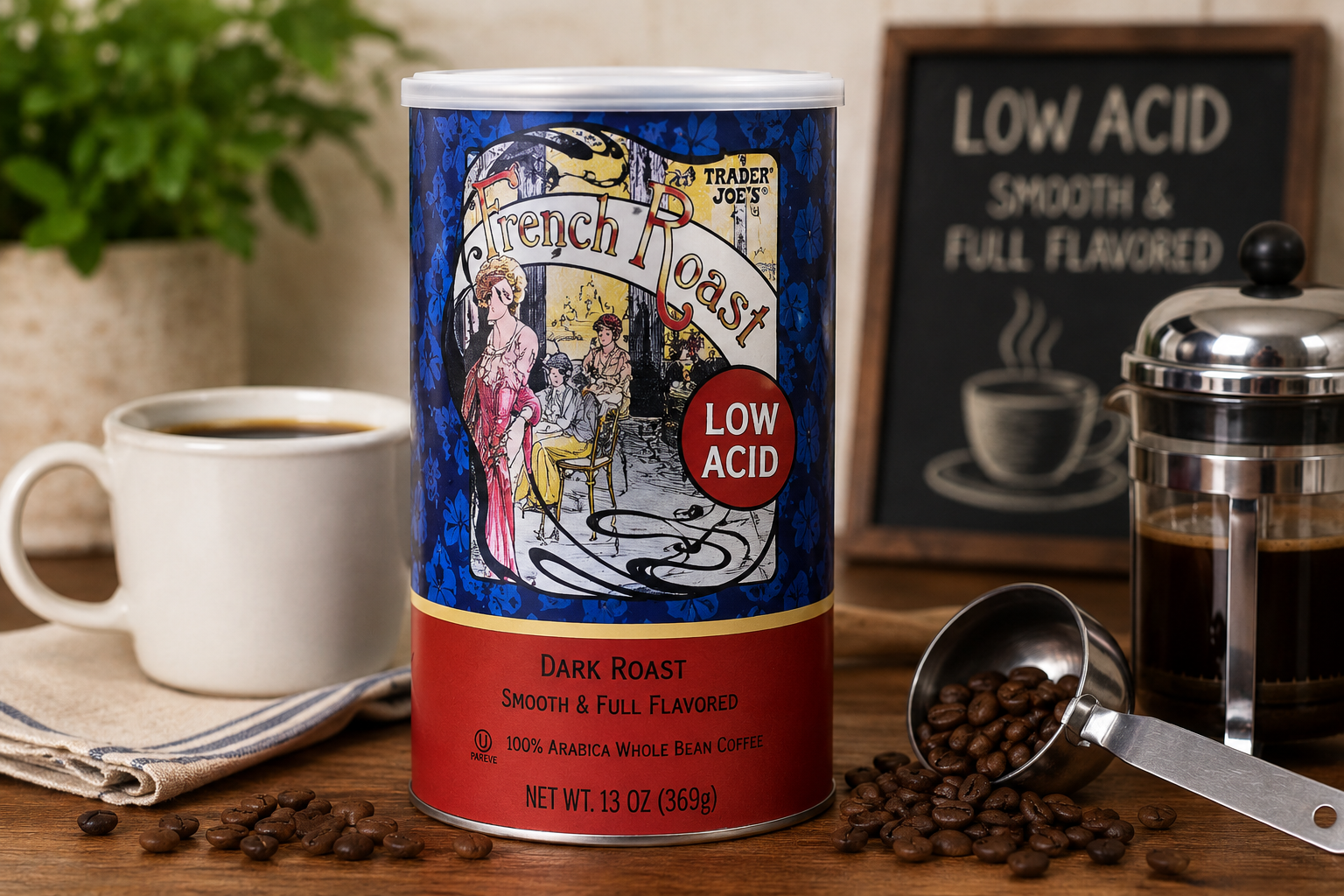
CASE NAME: McIntosh v. Trader Joe’s Company
CASE NO.: Not specified
JURISDICTION: United States District Court for the Southern District of New York
FILED ON: April 28, 2026
CLASS DEFINITION: All persons in the United States who purchased Trader Joe’s Low Acid Dark French Roast Coffee, with a New York subclass for those who purchased the product in New York during the relevant period.
SUMMARY:
According to the complaint, Trader Joe’s allegedly misled consumers by marketing its Low Acid Dark French Roast Coffee as a low-acid, fully caffeinated product when it purportedly contains significantly reduced caffeine and only marginally lower acidity than regular coffee. The plaintiff claims that consumers rely on “low acid” labeling for health reasons and are willing to pay a premium for such products. However, testing cited in the lawsuit allegedly shows the coffee does not meaningfully differ in acidity from regular coffee and instead resembles a half-caffeinated product. As a result, consumers were allegedly deceived into purchasing a product that did not meet their expectations or provide the advertised benefits.
ALLEGATIONS:
The lawsuit alleges that Trader Joe’s Company engaged in false and misleading labeling and advertising by representing its Low Acid Dark French Roast Coffee as both “Low Acid” and “100% Arabica Whole Bean Coffee,” which consumers reasonably interpret as a regular, fully caffeinated coffee with reduced acidity.
According to the complaint, low-acid coffee is a distinct and premium category sought by consumers who experience acid reflux, digestive sensitivities, or other health concerns. These consumers are willing to pay significantly more for coffee that meaningfully reduces acidity without altering caffeine levels.
The plaintiff alleges that testing contradicts the product’s labeling. As shown in the chart on page 8, caffeine testing indicates that Trader Joe’s Low Acid coffee contains significantly less caffeine than regular coffee and even less than some half-caffeinated (“half-caff”) products. Based on these findings, the complaint asserts that the product more closely resembles half-caff coffee rather than regular coffee, despite lacking any disclosure of reduced caffeine content.
In addition, the lawsuit alleges that acidity testing does not support the “low acid” claim. Laboratory testing found that the coffee has a pH of approximately 5.44, which falls within or near the typical range for regular coffee. The complaint explains that meaningful low-acid coffee should exceed a pH threshold of 5.5 or reflect at least a 50% reduction in acidity. Because the product does not meet these benchmarks, the plaintiff claims the “Low Acid” label is misleading and exaggerates the product’s benefits.
The complaint further alleges that Trader Joe’s reinforces this alleged deception through its packaging and descriptions. The label prominently highlights “Low Acid” while stating that a natural steaming process reduces acidity “but not [the] flavor,” without disclosing any impact on caffeine levels. The plaintiff claims this omission misleads consumers into believing they are purchasing standard caffeinated coffee with reduced acidity.
The lawsuit also alleges that Trader Joe’s was aware of these discrepancies but failed to correct them. According to the complaint, the company continued to market the product as fully caffeinated and low acid, even after learning that its caffeine levels were significantly reduced. The plaintiff claims that, in at least one instance, customer service allegedly informed a consumer that the product had the same caffeine as regular coffee, further perpetuating the alleged misrepresentation.
The plaintiff contends that these representations are material because consumers rely on both caffeine and acidity levels when selecting coffee. Individuals seeking low-acid coffee often expect to maintain regular caffeine intake while reducing digestive discomfort. The complaint alleges that consumers instead received a product with reduced caffeine and insufficient acidity reduction, undermining both expectations.
As a result of the alleged misrepresentations, the plaintiff claims that consumers paid a premium price for a product that did not deliver the promised characteristics. The lawsuit asserts violations of New York consumer protection laws, false advertising statutes, fraud, and breach of express warranty, and seeks damages, restitution, and injunctive relief.

Leave a Reply