CASE NAME: Ferguson v. Walgreen Co.
CASE NO.: 26CV01339
JURISDICTION: Superior Court of California, County of Santa Cruz
FILED ON: April 20, 2026
CLASS DEFINITION: All California citizens and residents who purchased Walgreens Men’s Testosterone Complex in California for personal use from January 1, 2019 to the present.
SUMMARY:
Walgreen Co. is facing a class action lawsuit alleging that its Walgreens Men’s Testosterone Complex supplement is falsely marketed as increasing testosterone levels, improving sexual function, and enhancing muscle mass and strength. Plaintiffs claim these representations are misleading because the product’s ingredients do not provide the advertised benefits. The lawsuit further alleges that the supplement is unlawfully marketed as a dietary supplement despite making claims that classify it as an unapproved drug under federal law, resulting in consumers purchasing an ineffective and allegedly illegal product.
ALLEGATIONS:
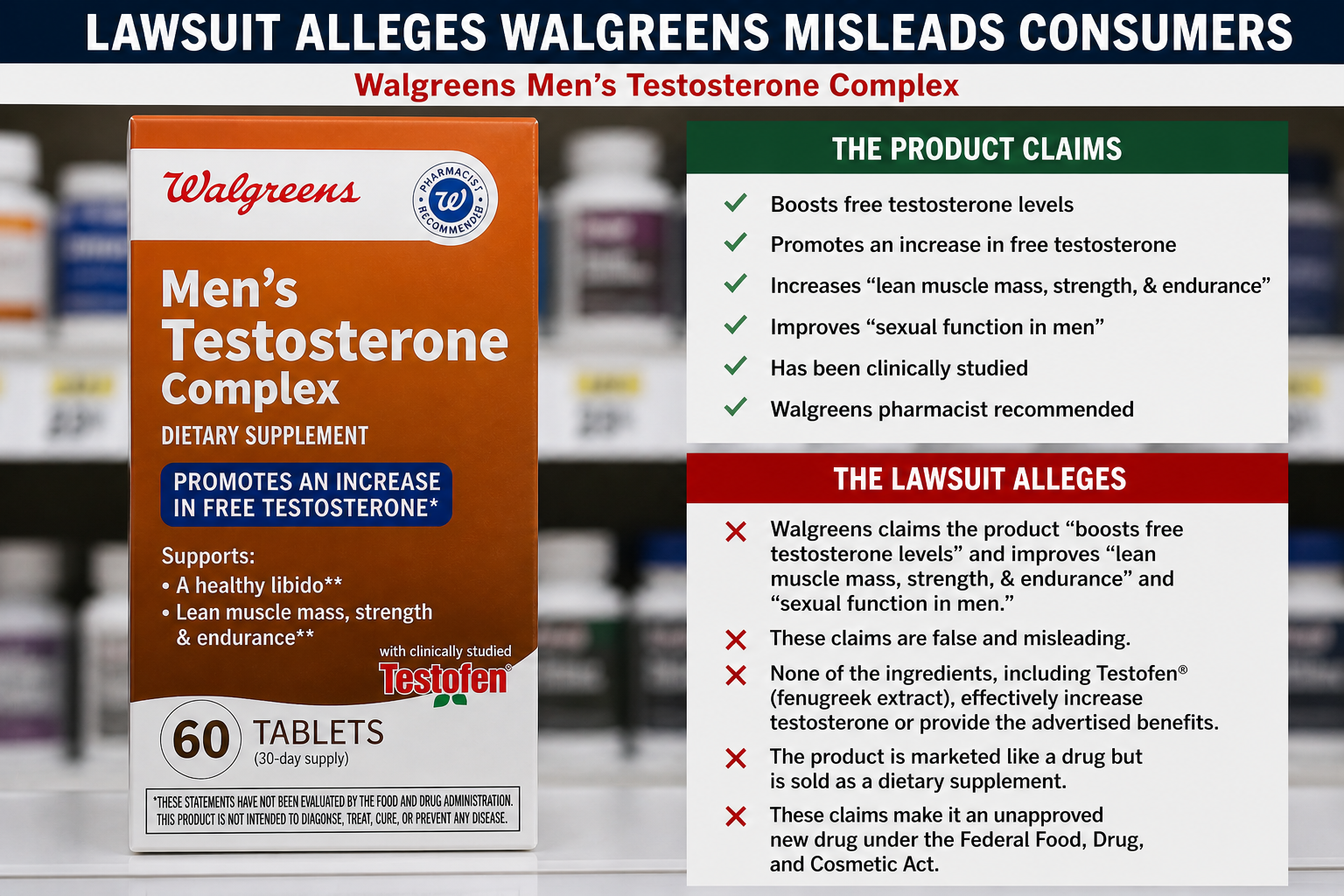
The lawsuit alleges that Walgreens marketed, distributed, and sold its Men’s Testosterone Complex with prominent claims that it can “boost free testosterone levels,” “promote an increase in free testosterone,” and improve “lean muscle mass, strength, and endurance,” as shown on the product packaging and website screenshots included in the complaint (pages 3 and 10). Plaintiffs contend these claims are false and misleading because none of the product’s ingredients, either individually or in combination, effectively increase testosterone levels or deliver the advertised physical or sexual health benefits.
According to the complaint, the product relies on an ingredient called Testofen, a fenugreek extract marketed as supporting hormone levels. However, the lawsuit cites multiple scientific studies indicating that fenugreek extract does not significantly increase testosterone levels and may have no meaningful effect on hormonal status. Plaintiffs allege that despite this lack of scientific support, Walgreens marketed the product as “clinically studied” and “pharmacist recommended,” reinforcing the impression that it is effective.
The complaint further alleges that the product’s claims go beyond permissible dietary supplement representations and instead constitute “drug claims” under federal law. By promoting benefits such as increased testosterone, improved sexual performance, and enhanced muscle growth, the lawsuit contends that the product is intended to affect the structure and function of the body or treat conditions like low testosterone and sexual dysfunction. As described in the regulatory discussion in the complaint, such claims require approval from the U.S. Food and Drug Administration. Plaintiffs allege that Walgreens failed to obtain such approval, rendering the product an unapproved new drug that is unlawfully sold.
In addition, the lawsuit claims that the product’s marketing misleads consumers into believing it is safe, effective, and legally compliant. The complaint states that consumers reasonably expect products sold by major retailers to meet regulatory standards and deliver advertised benefits. Plaintiff Jason Ferguson alleges that he purchased the product multiple times in reliance on these representations and that it failed to produce any of the promised results.
The complaint also emphasizes broader concerns about “testosterone boosting” supplements, citing studies referenced in the background section (pages 5–8) that suggest most such products lack scientific support and may pose risks or lead consumers to delay effective medical treatment. Plaintiffs allege that Walgreens capitalized on consumer demand for such products while failing to provide substantiated benefits.
Based on these allegations, the lawsuit asserts that Walgreens engaged in unlawful, unfair, and fraudulent business practices in violation of California’s Unfair Competition Law, False Advertising Law, and Consumer Legal Remedies Act. Additional claims include breach of warranties, negligent misrepresentation, fraud, and unjust enrichment. Plaintiffs seek restitution, damages, injunctive relief requiring corrective advertising, and an order prohibiting continued sale of the product under the current labeling.
Tell us what you think.

Leave a Reply