CASE INFORMATION
Case Name: Sylvia Diana Amavisca and Joshua Jonathan Raoufpur v. The Simply Good Foods Company
Case No. 3:26-cv-04971-JLS-MMP
Jurisdiction: United States District Court Southern District of California
File Date: 09/01/26
Class Definition: Consumers in California and certain other states who purchased specified Atkins and Quest products marketed with low sugar claims and allegedly paid a price premium based on those representations.
Summary
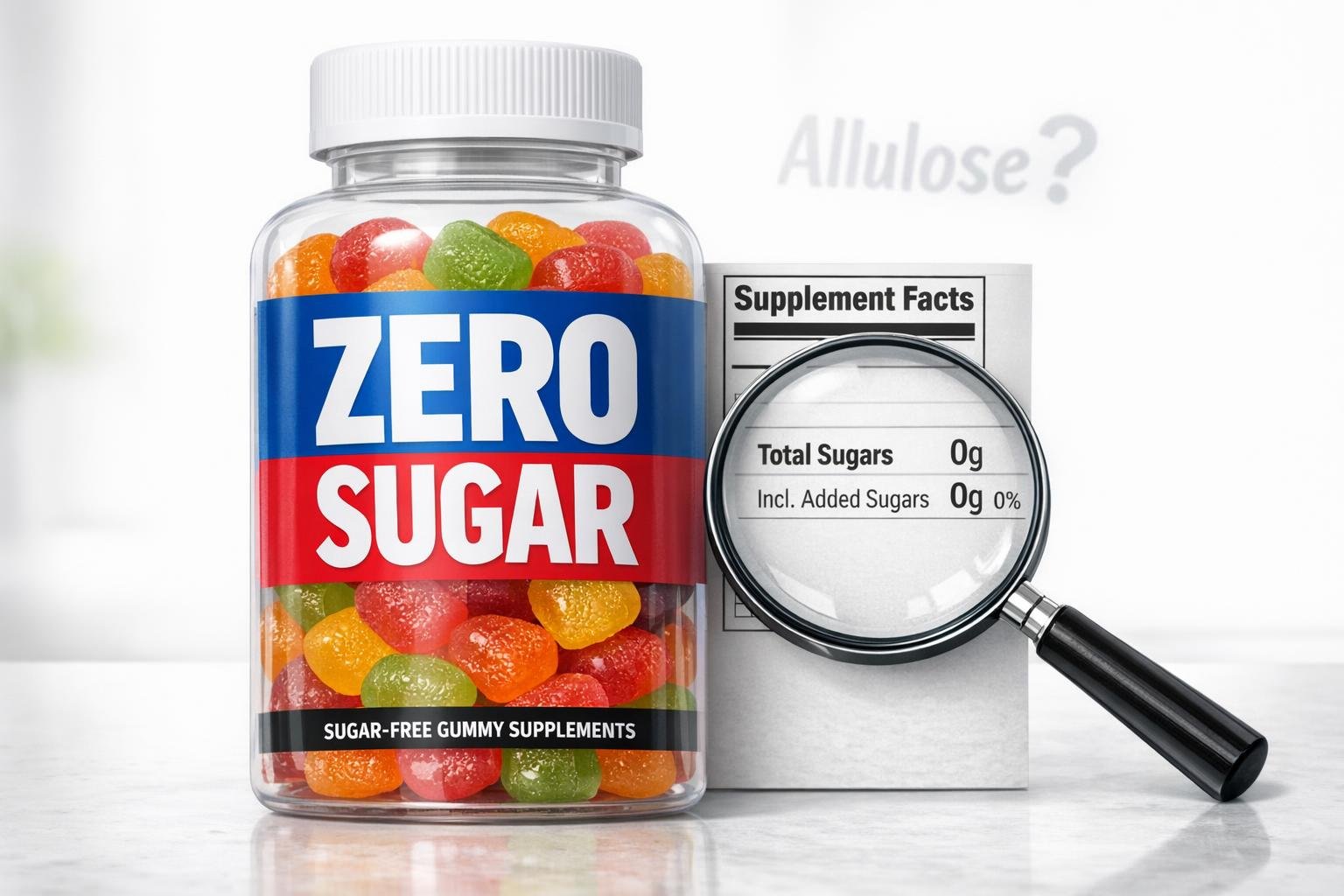
Plaintiffs Sylvia Diana Amavisca and Joshua Jonathan Raoufpur bring a putative class action against The Simply Good Foods Company, alleging that the company falsely advertises various Atkins snacks and Quest protein bars as containing only 1–2 grams of sugar (or “<1G SUGAR”) while adding several grams of allulose, which the lawsuit contends is a “sugar” under federal regulations. The complaint asserts that Simply Good Foods’ front-label and marketing claims misrepresent the products’ true sugar content by excluding allulose from the sugar tally, even though allulose is a monosaccharide and functions as a sugar-like sweetener.
The complaint alleges violations of FDA nutrient-content-claim regulations, federal misbranding provisions, and California law, including the Sherman Law, the Unfair Competition Law, the False Advertising Law, and the Consumers Legal Remedies Act. Plaintiffs claim consumers paid a price premium for products promoted as very low in sugar and seek monetary and injunctive relief on behalf of a California and multi-state class.
Allegations
The Simply Good Foods Company markets a range of Atkins-branded snacks and Quest-branded protein bars with prominent front-label statements emphasizing very low sugar content. The products at issue include:
- Atkins Keto Caramel Almond Clusters
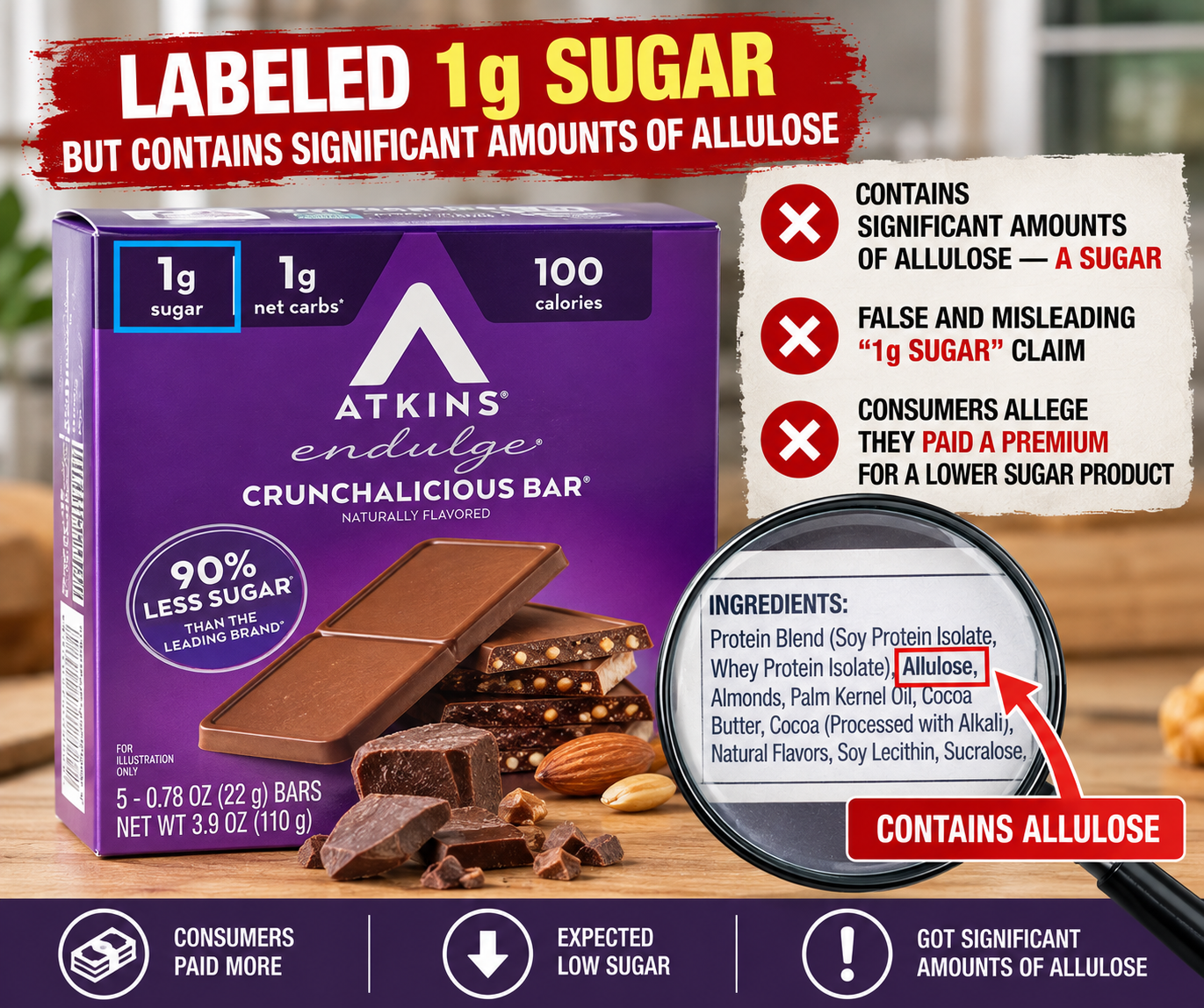
- Atkins Endulge Crunchalicious Bars
- Atkins Endulge Gummy Bears
- Quest Crispy and Stacks protein bars, including the Quest Cookies & Cream Crispy bar
The lawsuit alleges these products display front-of-package claims such as “<1G SUGAR,” “1g SUGAR,” and “2g SUGAR” on the principal display panel and that similar low sugar claims appear on the Atkins website, online retail listings, and other advertising materials.
The complaint alleges the front-of-package sugar statements are misleading because the products are sweetened with substantial amounts of allulose, described as a low-calorie sweetener that is chemically a monosaccharide. Plaintiffs assert that under 21 C.F.R. § 101.9(c)(6)(ii), “sugars” are defined as the sum of all free mono- and disaccharides, and that allulose therefore qualifies as a “sugar” for purposes of that regulation.
The complaint further alleges that the FDA and scientific literature recognize allulose as a sugar and that it functions in foods as a bulk sweetener similar to sucrose or fructose. It also cites a federal appellate decision, Franco v. Chobani, as confirming that allulose must be treated as a sugar under the regulation.
Product-specific examples
- Atkins Keto Caramel Almond Clusters: Front label allegedly states “<1G SUGAR” and “ZERO GRAMS ADDED SUGAR,” while the back-panel “net carbs” calculation purportedly discloses that each 26-gram cluster contains 3 grams of allulose.
- Atkins Endulge Crunchalicious Bars: Marketed as having “1g SUGAR” but alleged to contain 5 grams of allulose per serving.
- Atkins Endulge Gummy Bears: Labeled as “<1g SUGAR,” but alleged to contain 8 grams of allulose per serving.
- Quest Cookies & Cream Crispy bar: Bears a “1g SUGAR” claim on the front label while the net carbohydrate information allegedly reflects 11 grams of allulose in each bar.
The complaint alleges these labeling practices undercount sugar by excluding allulose from the sugar calculation, creating a discrepancy between the low sugar claims and the amount of allulose included.
Plaintiffs allege the labeling constitutes false and misleading nutrient-content claims because sugars are calculated by counting mono- and disaccharides and should include allulose under applicable federal law. The lawsuit alleges the products are misbranded under the Federal Food, Drug, and Cosmetic Act and that the low sugar representations violate the FDA’s nutrient-content-claim rules in 21 C.F.R. § 101.13. Because California’s Sherman Law incorporates federal food labeling standards, the complaint asserts corresponding state misbranding claims and additional causes of action under California’s Unfair Competition Law, False Advertising Law, and Consumers Legal Remedies Act.
The plaintiffs allege reasonable consumers place significant importance on sugar content for health, dietary, and lifestyle reasons and that there is strong consumer demand for low- and no-sugar products. The complaint contends the challenged products were positioned to capitalize on this demand by highlighting very low sugar numbers and thus commanded a price premium. Plaintiffs claim they relied on the low sugar representations when purchasing the products in California and would not have purchased them, or would have paid substantially less, had they known the products contained several grams of allulose counted as sugar under federal regulations.
The lawsuit seeks to represent a California class and a multi-state consumer protection class of purchasers who allegedly paid a premium due to the low sugar claims. The complaint requests:
- Damages, restitution, and disgorgement of the alleged price premium
- Injunctive relief requiring The Simply Good Foods Company to discontinue the challenged sugar representations and provide corrective disclosures about the role of allulose
- Class certification
- Recovery of attorneys’ fees
- Punitive damages based on allegations that the misrepresentations were intentional and knowing

Leave a Reply