
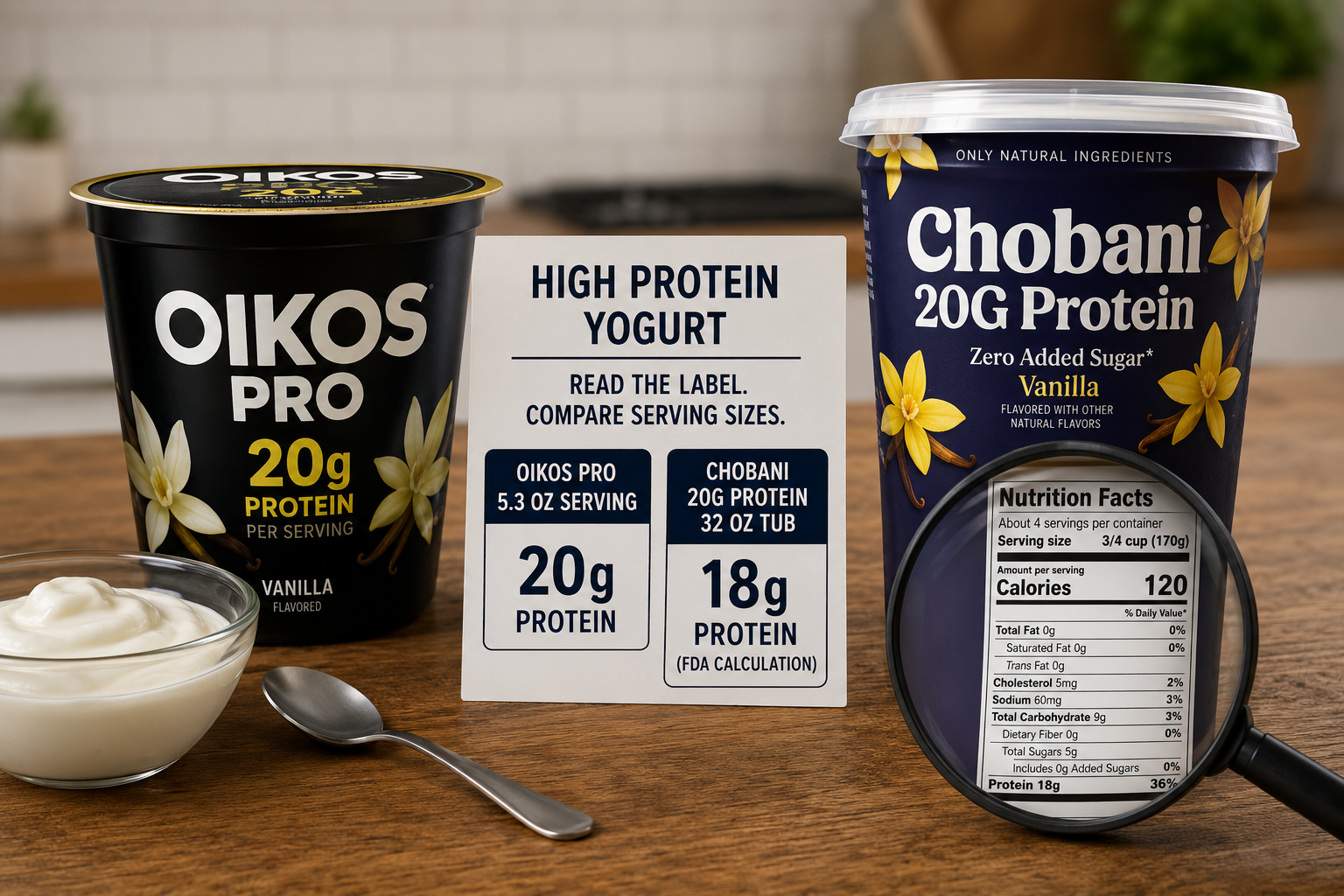
In an interesting turn of events, a major yogurt manufacturer sues a competitor claiming that their product labeling misleads consumers. Danone US has filed a lawsuit against Chobani in the U.S. District Court for the Southern District of New York, accusing its rival of misleading consumers through the naming, labeling, and advertising of Chobani’s “20G Protein” yogurt products. According to the complaint, Chobani improperly markets certain yogurt products as containing 20 grams of protein per serving when, Danone alleges, they do not meet that threshold under FDA serving-size regulations.
The lawsuit centers on the growing importance of protein content in consumer food choices. Danone argues that 20 grams of protein per serving has become a key benchmark for shoppers seeking high-protein foods, particularly as demand has increased due to health trends, weight-management programs, and the growing popularity of GLP-1 medications. Danone says it invested heavily in technology and manufacturing capabilities to create its Oikos Pro yogurt line, which contains at least 20 grams of protein per serving and is marketed toward protein-conscious consumers.
According to Danone, Chobani launched its competing “20G Protein” yogurt line in 2024 to target the same market segment. The complaint alleges that while Chobani’s single-serving cups legitimately contain 20 grams of protein because they are packaged in larger 6.7-ounce containers, the company uses a different approach for its 32-ounce multi-serving tubs. Danone claims those larger containers rely on an improperly calculated serving size that allows Chobani to advertise 20 grams of protein per serving even though, under FDA rules, the figure would be closer to 18 grams.
The lawsuit explains that FDA regulations require standardized serving-size calculations for multi-serving products so consumers can make fair nutritional comparisons across competing brands. Danone alleges that Chobani inflated the serving size used on its nutrition label by about 12.5%, resulting in protein claims that appear higher than they should be. If the FDA methodology were followed, Danone contends, the product could not be marketed as “20G Protein” in its multi-serving format.
Danone further argues that Chobani’s marketing creates the impression that its yogurt competes directly with Oikos Pro in the ultra-high-protein category. The complaint states that Oikos Pro contains substantially more protein per ounce than the Chobani product and that consumers comparing front-of-package protein claims may not realize the difference. Danone maintains that, if accurately labeled, Chobani’s product would compete more closely with Oikos Triple Zero, another Danone yogurt that contains less than 20 grams of protein per serving and is typically sold at a lower price point.
The lawsuit also cites consumer research, including a survey commissioned by Danone, which found that most yogurt buyers assume competing brands use the same standardized serving-size rules when making protein claims. Danone argues that Chobani’s labeling takes advantage of consumer expectations and confusion about nutrition information, particularly at a time when protein consumption is a major focus for many shoppers.
Beyond product packaging, Danone points to Chobani’s advertising and social media campaigns, which repeatedly emphasize the “20 grams of protein” claim. According to the complaint, these promotional materials reinforce the impression that the multi-serving yogurt tubs provide 20 grams of protein per serving when calculated according to accepted standards.
Danone is seeking a court order that would prohibit Chobani from using the “20G Protein” name and related protein claims on the multi-serving products, as well as corrective advertising, damages, disgorgement of profits, and other legal remedies. The company alleges violations of the Lanham Act, New York consumer protection laws, California unfair competition laws, and common-law unfair competition. Chobani has not yet presented its defense in the complaint.
Lanham Act claims are unfair business practice claims brought by manufacturers against competitors. The factual underpinnings are based on consumer deception, so the outcome, if successful, should result in a more accurately labeled product. Although many manufacturers are aware of competitors deceptive practices, they tend to shy away from bringing Lanham Act claims because of the cost and potential concerns of retribution. Those in glass houses should not cast stones. Meritorious Lanham Act complaints should be encouraged. They promote honest competition and are good for the consuming public.

Leave a Reply