
CASE NAME: Bianca Marinelli v. Bloom Nu LLC
CASE NO.: 1:26-cv-02689
JURISDICTION: United States District Court for the Eastern District of New York
FILED ON: May 5, 2026
CLASS DEFINITION: All persons in the United States, with a New York subclass, who purchased Bloom Sparkling Energy drinks during the applicable statute of limitations period.
SUMMARY:
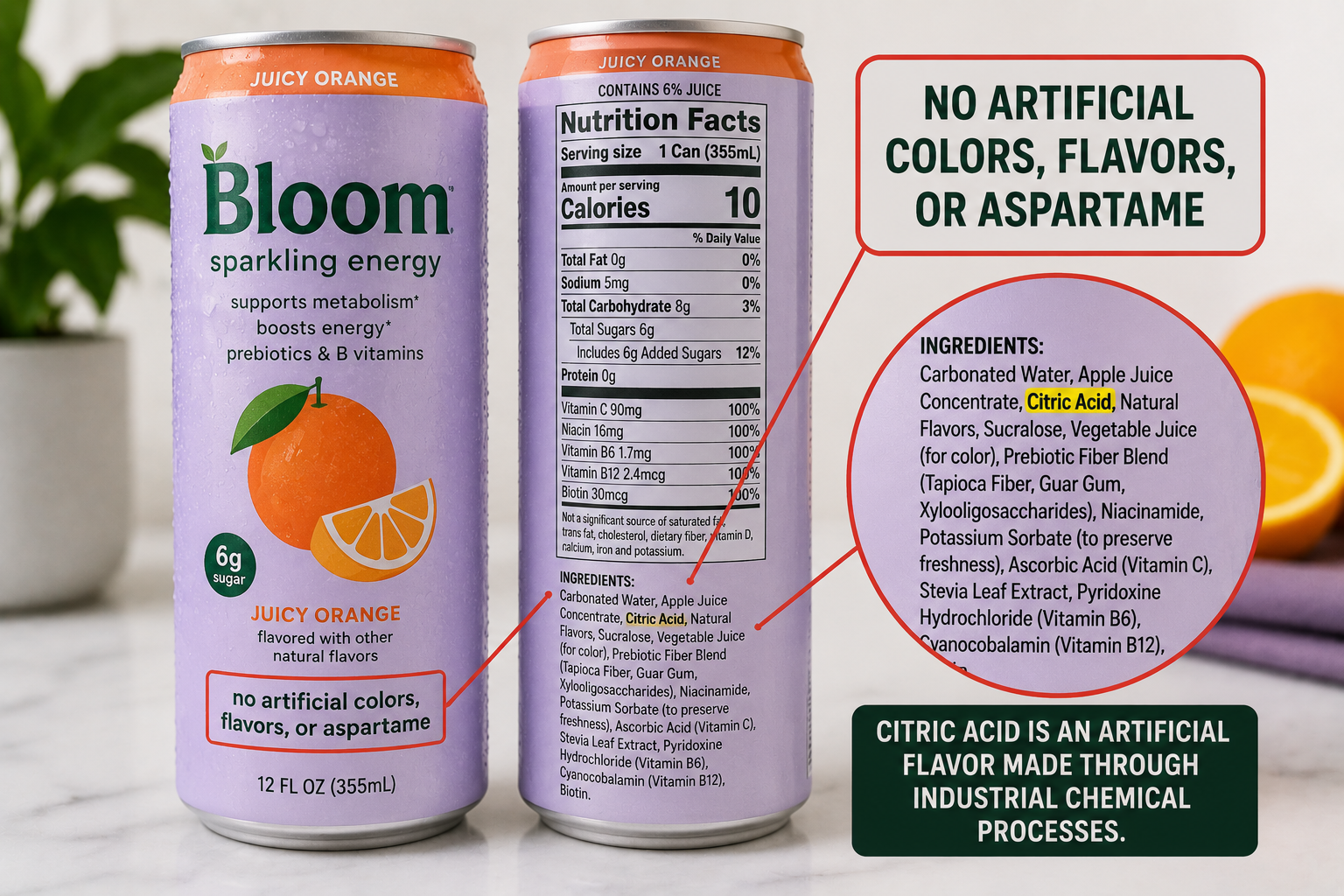
Bloom Nu LLC is facing has been named in a class action lawsuit alleging that it falsely markets its Bloom Sparkling Energy drinks as containing “no artificial colors, flavors, or aspartame.” The lawsuit claims that despite this representation, the products contain citric acid, which the plaintiff alleges is an artificial flavor due to its industrial manufacturing process. The plaintiff contends that consumers rely on “no artificial flavors” claims when purchasing beverages and were misled into paying a premium for products they believed were free from artificial ingredients.
ALLEGATIONS:
The complaint alleges that Bloom prominently labels its Sparkling Energy drinks with the statement “no artificial colors, flavors, or aspartame,” which appears clearly on the front of the cans and is intended to attract health-conscious consumers. As shown in the product image on page 3 of the complaint, this claim is highlighted in a boxed callout on the packaging, reinforcing the impression that the drinks are free from artificial ingredients.
However, the plaintiff contends that this representation is false and misleading because the products contain citric acid, which is alleged to be an artificial flavor. According to the complaint, while citric acid can occur naturally in citrus fruits, the form used in the products is commercially manufactured through fermentation processes involving microorganisms such as Aspergillus niger. The complaint explains that this industrial process involves chemical extraction and the use of synthetic solvents, making the ingredient artificial rather than natural.
The lawsuit further alleges that the citric acid used in the products is not derived directly from fruit but is instead produced through extensive chemical processing. As described in the complaint (pages 4–7), the manufacturing process includes fermentation, chemical treatment, and purification steps involving substances such as sulfuric acid and synthetic solvents. The plaintiff claims that this process results in an ingredient that should be classified as artificial under regulatory and common definitions.
In addition, the complaint asserts that citric acid functions as an artificial flavor in the products by imparting a sour or tart taste. As noted in the complaint (page 9), citric acid is commonly used in beverages to create specific flavor profiles, reinforcing the argument that it serves as a flavoring agent rather than merely a preservative.
The lawsuit also alleges that the products contain other synthetic ingredients, including sucralose, potassium benzoate, and niacinamide. According to the complaint, these ingredients are chemically manufactured and further undermine the “no artificial” representations. The ingredient panel shown on page 9 highlights these components, which the plaintiff claims contradict the product’s marketing claims.
The plaintiff further contends that Bloom’s labeling exploits consumer demand for “clean label” products. According to the complaint, a significant percentage of consumers seek out products labeled as free from artificial ingredients because they associate such products with better health and less processing. By making “no artificial flavors” claims, the defendant allegedly positions its products as healthier alternatives and charges a premium price.
The complaint alleges that the plaintiff purchased the product relying on these representations and would not have done so, or would have paid less, had she known the truth. As a result, the lawsuit claims that consumers suffered economic harm in the form of overpayment for products that did not meet their advertised qualities.
Based on these allegations, the lawsuit asserts claims under New York General Business Law §§ 349 and 350 for deceptive practices and false advertising, as well as claims for breach of express warranty and unjust enrichment. The plaintiff seeks damages, restitution, injunctive relief, and other remedies on behalf of herself and similarly situated consumers.
Leave a Reply