
CASE NAME: Constantine Glinka v. Boiron, Inc.
CASE NO.: 2:26-cv-02643
JURISDICTION: United States District Court for the Eastern District of New York
FILED ON: May 4, 2026
CLASS DEFINITION: All persons in the United States, with a New York subclass, who purchased Boiron Arnicare products for personal use during the applicable statute of limitations period.
SUMMARY:
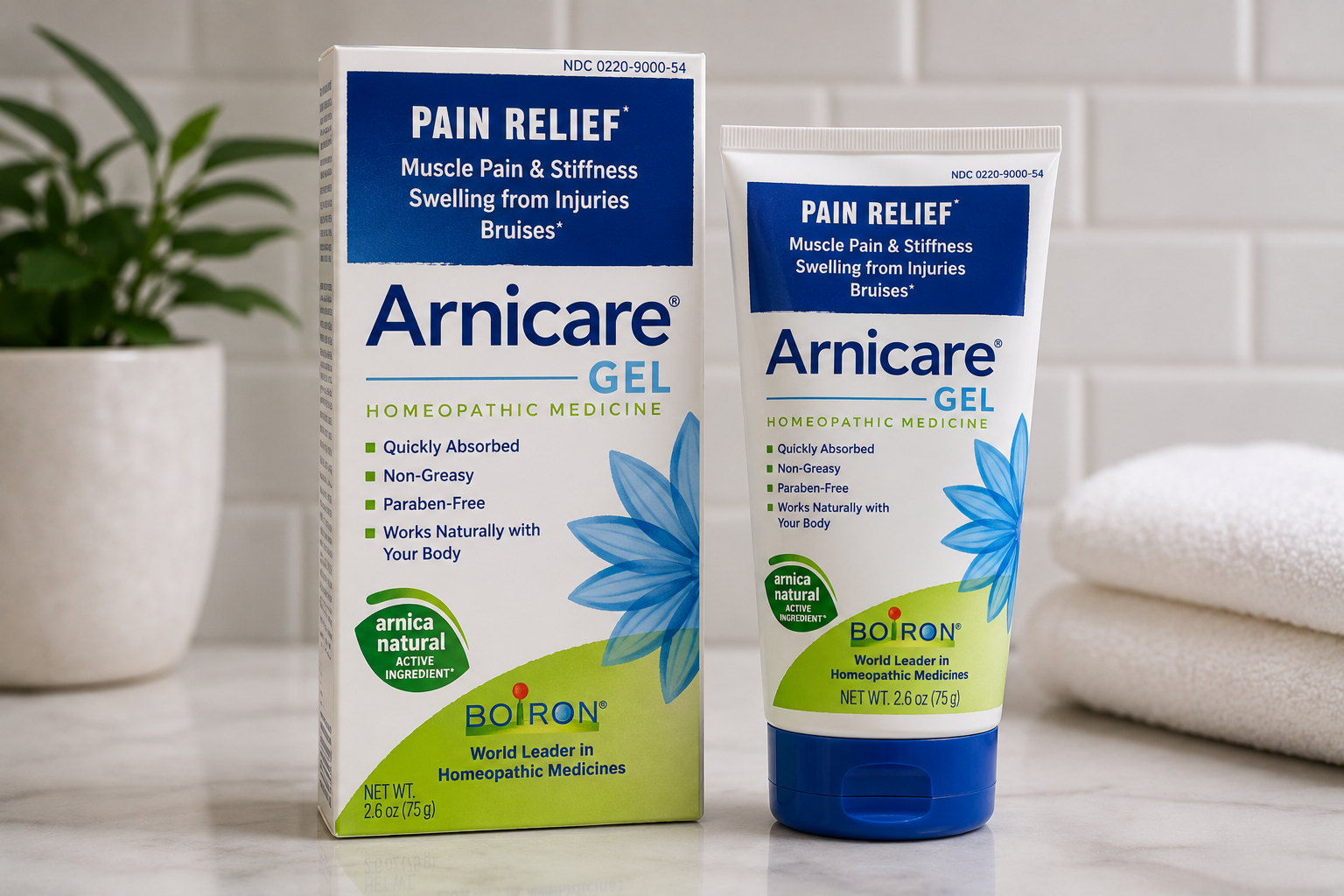
Boiron, Inc. is facing a proposed class action lawsuit alleging that it falsely markets its Arnicare products as providing “pain relief.” The lawsuit claims that the products are homeopathic remedies containing highly diluted arnica montana, which lacks scientific evidence supporting its effectiveness. The plaintiff alleges that consumers were misled into believing the products would relieve pain, when in reality they perform no better than a placebo, resulting in consumers paying a premium for ineffective products.
ALLEGATIONS:
The complaint alleges that Boiron prominently labels its Arnicare products with the claim “PAIN RELIEF,” which appears in large, conspicuous text on product packaging. According to the lawsuit, this representation leads reasonable consumers to believe that the products are effective in treating pain.
However, the plaintiff contends that these claims are false and misleading because the products are based on homeopathy, a system of alternative medicine that lacks scientific validity. As described in the complaint, homeopathy relies on principles such as “ultra-dilution,” where substances are diluted to extremely low concentrations, and “potentization,” where repeated dilution and agitation are believed to increase effectiveness. The lawsuit alleges that these principles are not supported by modern science.
According to the complaint, Boiron’s Arnicare products contain arnica montana diluted to such an extent that little to none of the original substance remains. For example, as explained in the complaint, certain formulations are diluted to one-billionth of their original concentration, rendering them incapable of producing a physiological effect. The plaintiff argues that even if arnica had medicinal properties, the level present in the products would be insufficient to provide any real benefit.
The lawsuit further cites numerous scientific studies and reviews concluding that homeopathic remedies, including arnica, are no more effective than placebos. As referenced in the complaint, governmental and medical authorities—including the British Parliament’s Science and Technology Committee and the FDA—have found no reliable evidence supporting the efficacy of homeopathic treatments. Clinical trials and meta-analyses cited in the complaint similarly conclude that arnica does not reduce pain, swelling, or soreness compared to placebo treatments.
Additionally, the complaint alleges that some studies have shown that arnica may perform worse than a placebo in certain contexts, further undermining the credibility of the product’s claims. The plaintiff contends that Boiron failed to disclose this body of scientific evidence and instead marketed the products as effective pain relievers.
The lawsuit also asserts that consumers are unable to independently verify the effectiveness of such products and must rely on labeling claims. According to the complaint, Boiron capitalized on consumer trust and demand for over-the-counter pain relief products by promoting Arnicare as a legitimate therapeutic option.
The plaintiff alleges that he and other class members relied on the “pain relief” claim when purchasing the products and would not have done so, or would have paid less, had they known the truth. As a result, the complaint claims that consumers suffered economic harm by paying for products that did not perform as advertised.
Based on these allegations, the lawsuit asserts violations of New York General Business Law §§ 349 and 350 for deceptive practices and false advertising. The plaintiff seeks damages, restitution, injunctive relief, and other remedies on behalf of himself and similarly situated consumers.
Leave a Reply