
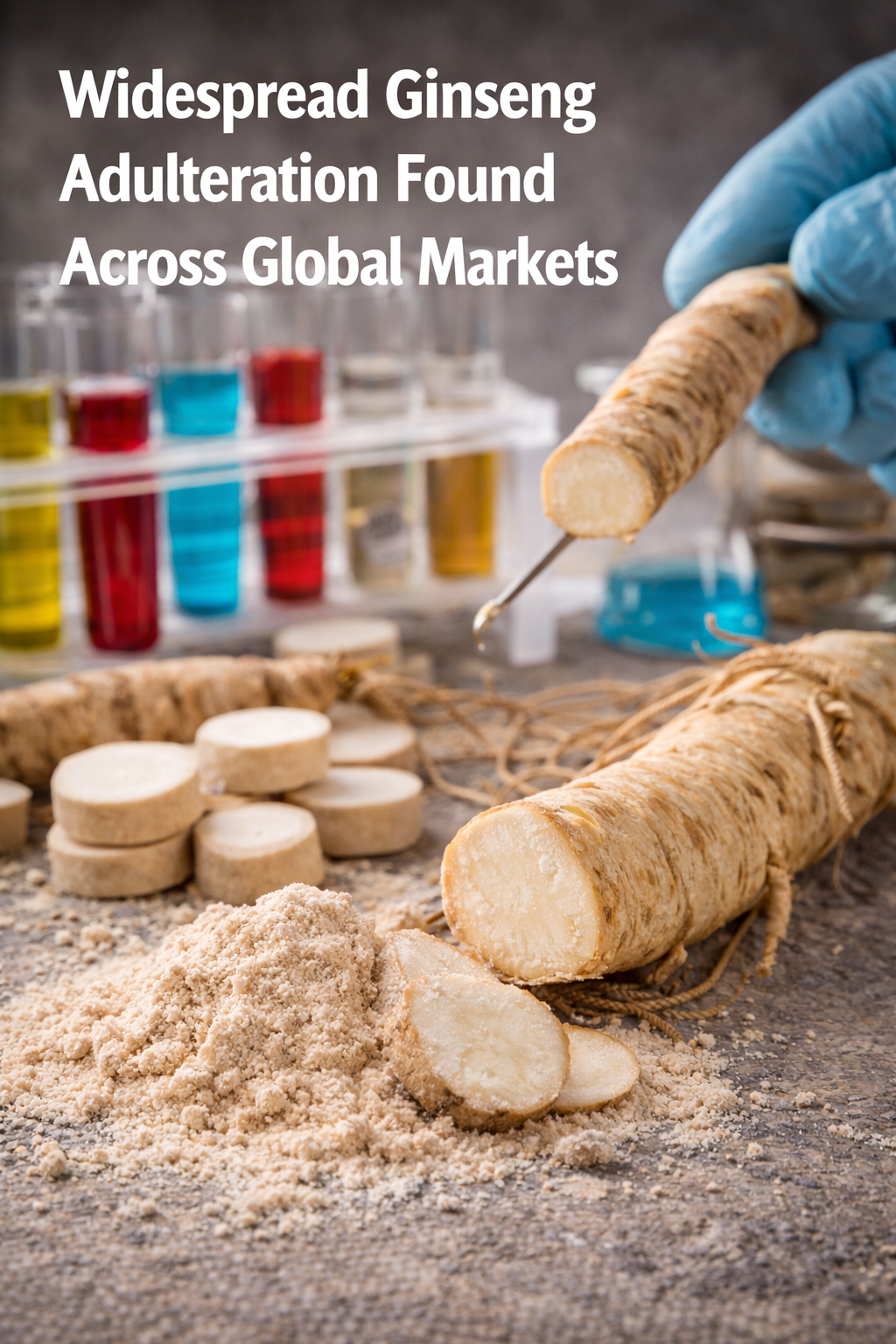
A comprehensive review by Nilüfer Orhan, Stefan Gafner, and Mark Blumenthal uncovers a significant global issue affecting one of the world’s most popular herbal products: ginseng adulteration. Published in Natural Product Communications, the study analyzed 48 peer-reviewed publications covering 911 commercial ginseng products sold across multiple continents. The findings reveal that nearly one in four products—24.7%—had authenticity problems, raising serious concerns about product quality, labeling accuracy, and consumer safety.
Ginseng, derived from plants in the Panax genus, has long been valued for its health-promoting properties, including boosting energy, supporting immune function, and improving overall vitality. The most commonly used species include Asian ginseng (Panax ginseng), American ginseng (Panax quinquefolius), and tienchi ginseng (Panax notoginseng). However, the study highlights that the high demand for these products, combined with their visual similarities and confusing naming conventions, has created ideal conditions for both accidental mislabeling and intentional fraud.
The most common form of adulteration identified in the review is the substitution of one Panax species for another, often using lower-cost materials. In many cases, products labeled as one type of ginseng actually contained a different species or a mixture of multiple species. The study also found frequent use of non-ginseng plants marketed under the “ginseng” name, such as so-called “Brazilian ginseng” or “Siberian ginseng,” which are not part of the Panax genus at all. This type of mislabeling can mislead consumers and diminish the expected health benefits.
Beyond species substitution, the researchers identified several other adulteration practices. These include the addition of undeclared plant parts such as leaves instead of roots, mixing in previously extracted or “spent” plant material, and the use of fillers like starches or other low-cost substances to increase product volume. These practices not only reduce product quality but also deceive consumers paying premium prices for authentic ginseng.
Perhaps most concerning is the discovery of pharmaceutical adulterants in some ginseng products. According to the study, eight investigations specifically looked for undisclosed drug ingredients and found that 48.3% of tested samples contained substances such as sildenafil, tadalafil, or antidiabetic drugs. These compounds are commonly used to treat conditions like erectile dysfunction or diabetes but were not listed on product labels. Their presence poses significant health risks, including dangerous drug interactions and unintended side effects.
The study also highlights regional differences in adulteration rates. As shown in the chart on page 7, South America reported the highest rate at 100%, though this was based on a small sample size and largely due to substitution with “Brazilian ginseng.” North America and Europe showed relatively high rates as well, at 38.1% and 27.3% respectively, while Asia had a slightly lower rate of 20.7%. However, the authors caution that limited data from some regions may affect the accuracy of these comparisons.
Product type and point of sale also play a role in adulteration risk. Dietary supplements were found to have a higher adulteration rate (43%) compared to traditional herbal medicines (28.3%). Additionally, products purchased directly from manufacturers had the lowest adulteration rate (13.5%), while those bought from pharmacies, health food stores, and markets showed higher rates (27.7%). Interestingly, online purchases fell in the middle, with a 23.6% adulteration rate.
The study further reveals that the method used to test products significantly impacts detection rates. As illustrated in the data on page 6, studies combining genetic and chemical analysis detected higher levels of adulteration (39.8%) compared to those using a single method. This finding underscores the importance of using multiple testing approaches to accurately identify fraudulent products.
Despite decades of research and increasing awareness, ginseng adulteration remains a persistent global problem. The authors emphasize the need for stronger regulatory oversight, improved testing standards, and better industry practices. They also call for increased education among manufacturers, regulators, and consumers to help identify and prevent adulteration.
Ultimately, this study serves as a critical reminder that even widely trusted natural products can be vulnerable to fraud. Ensuring the authenticity of ginseng requires coordinated efforts across the supply chain, from cultivation and processing to testing and retail.

Leave a Reply