
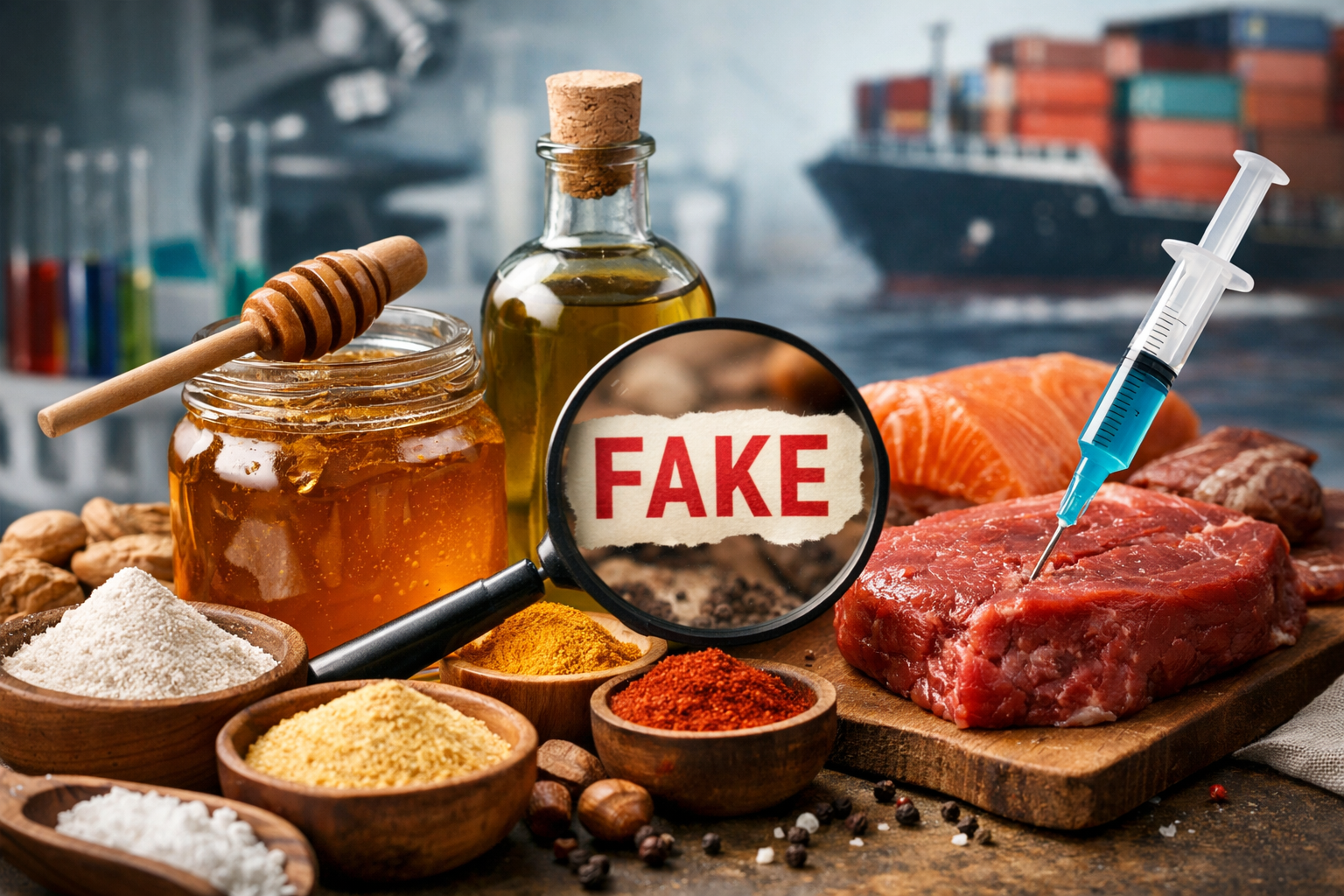
Food fraud might sound like something from the past, but according to reporting by BBC News, it remains a widespread and stubborn global problem. Even with advanced scientific tools and modern tracking systems, counterfeit and adulterated foods continue to make their way into supply chains—raising concerns for consumers, regulators, and honest producers alike.
Food fraud takes many forms. It can include substituting high-quality ingredients with cheaper alternatives, mislabeling products, or diluting items like honey, olive oil, and spices. These deceptive practices are often difficult to detect because they are designed to closely mimic authentic goods. In some cases, fraudulent products pass through multiple countries and suppliers before reaching store shelves, making accountability even harder to trace.
One of the key examples is honey, a product particularly vulnerable to fraud. Genuine honey can be expensive to produce, which creates an incentive for dishonest suppliers to dilute it with sugar syrups or misrepresent its origin. Scientists and regulators have developed increasingly sophisticated testing methods to identify these adulterations, including chemical analysis and isotope testing. However, fraudsters are constantly adapting, finding new ways to evade detection and stay one step ahead.
While technology has improved significantly, it is not a complete solution. Testing every batch of food is impractical due to cost and scale. Instead, most systems rely on risk-based sampling, which leaves gaps that fraudulent products can exploit. Additionally, global supply chains are incredibly complex, involving multiple intermediaries across different countries with varying standards and enforcement capabilities.
Another challenge is economic pressure. Food fraud is often driven by profit margins. When demand for certain products rises or supply is limited, the temptation to cut corners increases. This is especially true in industries where consumers are willing to pay a premium for authenticity, such as organic foods or region-specific specialties. Fraudsters take advantage of this willingness, knowing that verifying authenticity can be difficult for both consumers and retailers.
The article also points out that enforcement varies widely around the world. Some countries have strict regulations and strong monitoring systems, while others lack the resources or infrastructure to effectively police food fraud. This inconsistency creates opportunities for fraudulent goods to enter the global market through weaker points in the system.
Experts interviewed by the BBC stress that addressing food fraud requires more than just better technology. It also demands improved transparency, stronger international cooperation, and better incentives for ethical behavior. For example, creating systems that track products from farm to table can help, but only if all participants in the supply chain are held accountable. Similarly, increasing penalties for fraud and rewarding compliance can shift the balance away from dishonest practices.
Consumer awareness is another important factor. While individuals cannot test their food in a lab, being informed about common fraud risks can help people make smarter choices. Buying from trusted sources, checking labels carefully, and being cautious of prices that seem too good to be true are simple steps that can reduce the likelihood of purchasing fraudulent products.
Ultimately, the persistence of food fraud reveals a deeper issue: it is not just a technological problem, but a human one. As long as there are financial incentives and opportunities to exploit gaps in the system, fraud will continue to evolve. The challenge for regulators and industry leaders is to stay ahead—not just with better tools, but with smarter systems and stronger collaboration.
For the full article, visit: https://www.bbc.com/news/articles/c2e102vw1z2o




Leave a Reply