CASE NAME: Smet v. Compostic Limited
CASE NO.: 2:26-at-00398
JURISDICTION: United States District Court, Eastern District of California
FILED ON: March 4, 2026
CLASS DEFINTION: All people in the United States who purchased Compostic Cling Wrap for personal or household use during the last four years, and a California subclass consisting of all California residents who purchased the product during the same period.
SUMMARY:
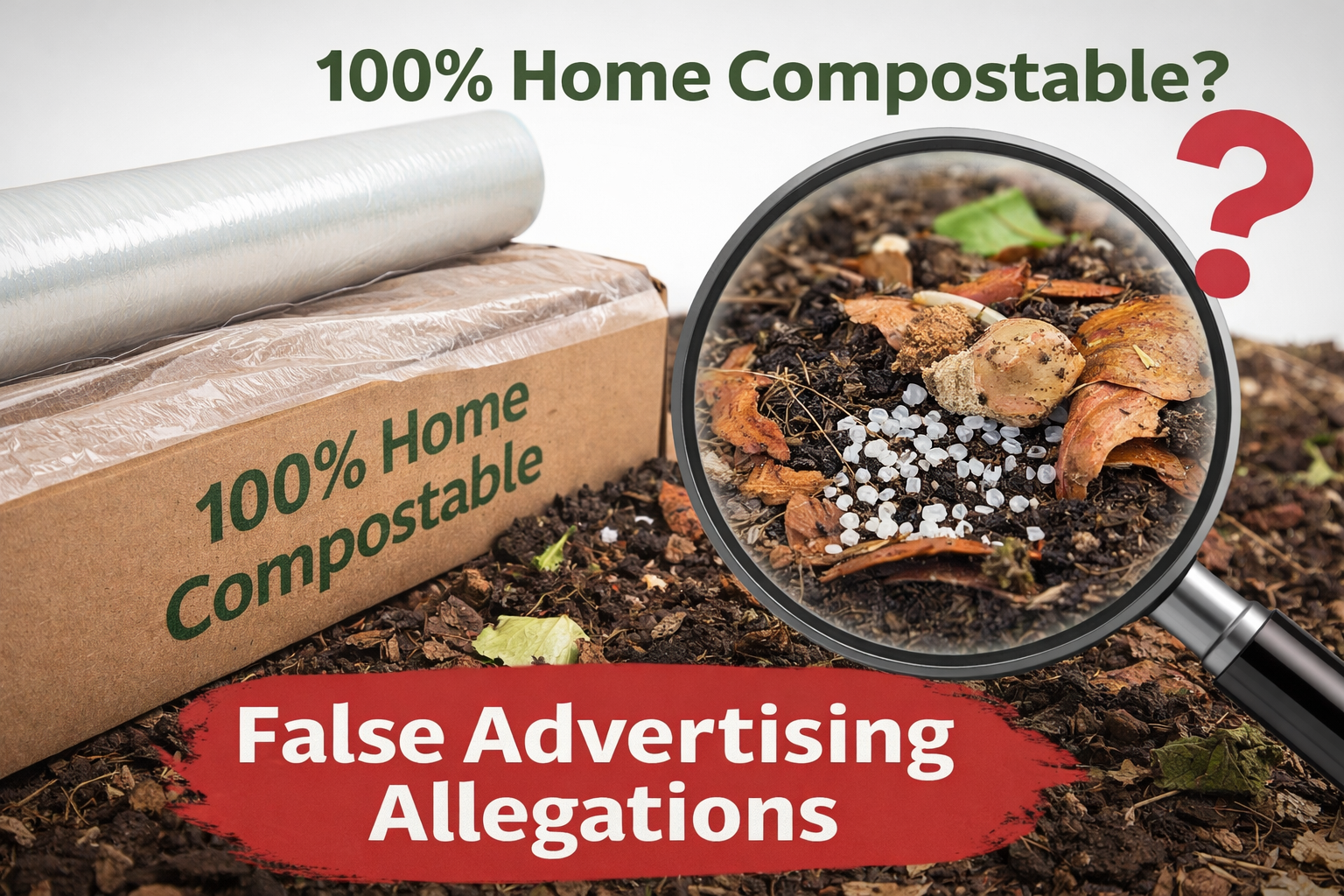
A proposed class action lawsuit filed in federal court in California alleges that Compostic Limited falsely markets its cling wrap products as “100% home compostable.” According to the complaint, the products contain certain materials that break down into microplastics and chemical byproducts that may harm plants and soil health. The plaintiff claims that consumers reasonably interpret compostable labeling to mean that a product can safely decompose into usable compost that benefits soil. The lawsuit alleges that Compostic’s labeling misleads consumers because the materials used in the product allegedly degrade into substances that inhibit plant growth and leave behind microplastics, rendering compost containing the material unusable. The plaintiff further alleges that consumers paid a price premium for the products based on the compostable representation and would not have purchased the product, or would have paid less, had they known the true nature of the materials. The lawsuit seeks damages, restitution, and injunctive relief on behalf of consumers who purchased the product nationwide and in California.
ALLEGATIONS:
According to the complaint, Compostic Limited manufactures and sells a line of food storage products marketed as “Compostic Cling Wrap.” The packaging prominently displays the statement “100% home compostable,” which the plaintiff alleges is a central marketing claim designed to attract environmentally conscious consumers.
The lawsuit alleges that reasonable consumers interpret compostable labeling to mean that a product can break down into non-toxic components that contribute to usable compost and benefit soil health. Consumers purchasing compostable products, the complaint claims, expect that the materials will safely degrade and can be added to compost that may later be used in gardens or soil without introducing harmful substances.
The plaintiff alleges that the Compostic cling wrap products contain polybutylene adipate terephthalate (PBAT) and polylactic acid (PLA). According to the complaint, PBAT is a synthetic polymer derived from petrochemical sources, while PLA is a bioplastic made from plant sugars. The lawsuit alleges that when these materials degrade, they can produce microplastics and chemical byproducts including adipic acid, terephthalic acid, and 1,4-butanediol.
The complaint cites several scientific studies which allegedly show that PBAT microplastics and their degradation products can negatively affect plant growth. According to the lawsuit, research has found that exposure to PBAT microplastics or their chemical breakdown products may reduce plant leaf area, decrease plant mass, and inhibit overall plant development. The complaint also alleges that soil containing PBAT microplastics may disrupt beneficial microbial interactions and increase oxidative stress in plants.
The lawsuit further alleges that PLA microplastics may also have adverse effects on soil health and plant growth. According to the complaint, certain studies report that PLA microplastics can negatively affect soil microorganisms, photosynthesis, and plant biomass. The plaintiff also alleges that PLA requires industrial composting conditions involving high temperatures that are not typically achievable in home compost environments.
Based on these allegations, the complaint asserts that the products cannot accurately be described as “100% home compostable.” The plaintiff claims that the materials break down into microplastics and chemicals that inhibit plant growth, thereby preventing the resulting compost from being beneficial to soil as consumers would expect.
The lawsuit alleges that the compostable representation appears prominently on product packaging and marketing materials and is intended to influence consumer purchasing decisions. According to the complaint, environmentally conscious consumers actively seek out compostable products and are willing to pay a premium for them compared to conventional alternatives.
The plaintiff alleges that she purchased Compostic Cling Wrap in approximately January 2025 from a Sacramento grocery retailer for about $7.99 after reading the compostable claim on the packaging. According to the complaint, the labeling was material to her purchasing decision, and she relied on the representation that the product was “100% home compostable.” The lawsuit alleges that she would not have purchased the product, or would have paid less for it, had she known the product allegedly contained materials that degrade into microplastics and chemicals harmful to plants.
The complaint asserts claims under California consumer protection statutes including the Consumer Legal Remedies Act, False Advertising Law, and Unfair Competition Law, as well as claims for breach of express warranty, unjust enrichment, and fraud. The plaintiff seeks damages, restitution, and an injunction preventing the defendant from continuing to market the products as compostable.
Leave a Reply